By Bella Davis, New Mexico In Depth
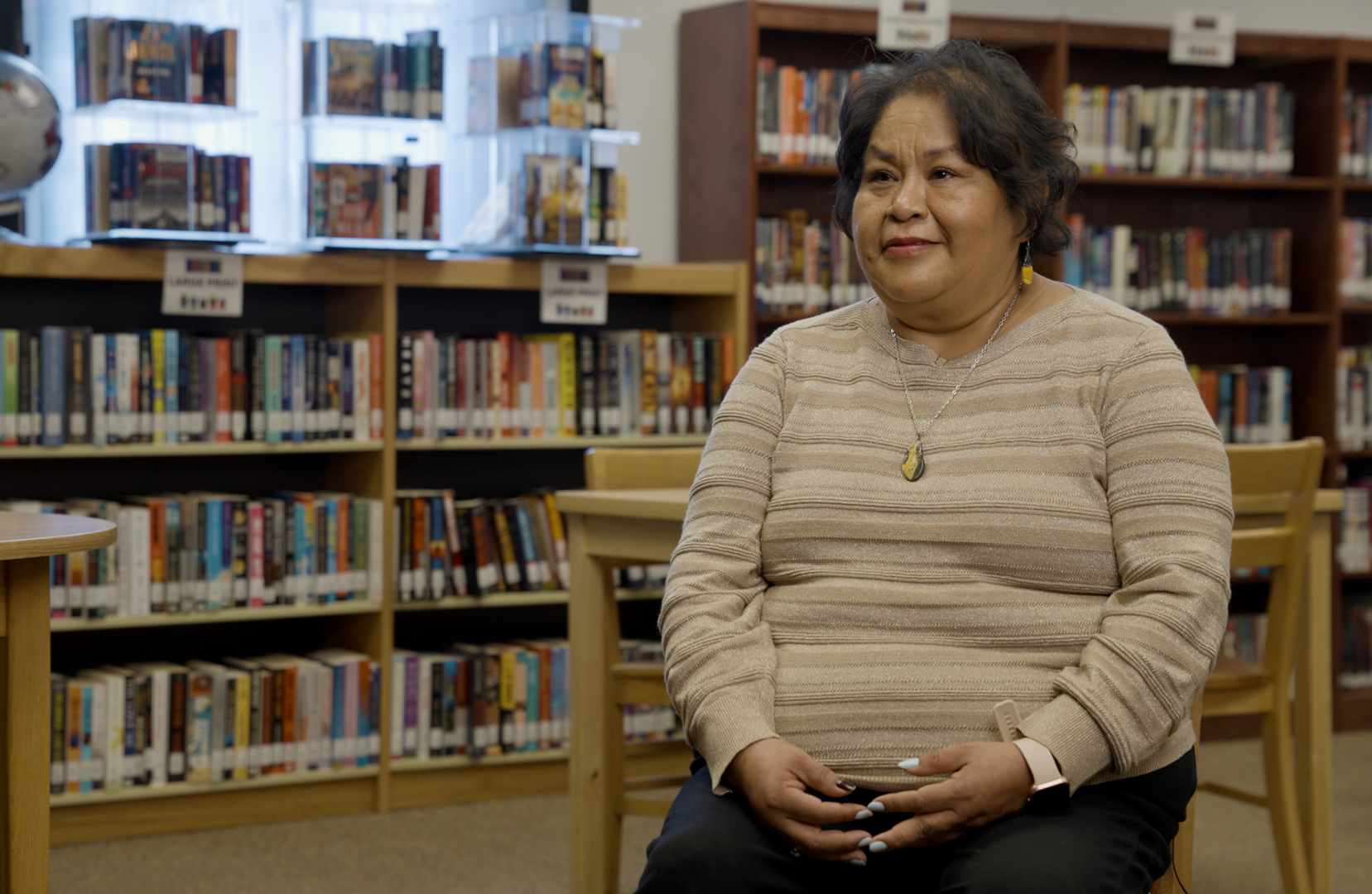
Growing up in Zuni Pueblo in northwest New Mexico, Valarie Bellson remembers walking to the tribe’s public library when she needed a place to hang out. Decades later, the staff helped her figure out how to apply for jobs online using their computer lab.
Now, as the library’s acting director and children’s program coordinator, Bellson takes pride in creating similar experiences for other people.
“With the high school interns and some adult volunteers we have, I always convey the message to them that our patrons come, they make time out of their day to come to our library, and let’s provide the best service,” Bellson said. “Let’s have them feel that they’ve accomplished something.”
Zuni Public Library, established in 1974, is one of 24 tribal libraries in New Mexico. Despite often having limited staff, they each provide essential and varied services.
“The tribal public libraries serve as a public library, so they’re open to the public, but they really are there to serve their communities, so their Pueblo, tribe, or nation, with whatever needs and wants that the community has,” said Cassandra Osterloh (Cherokee), the tribal libraries program coordinator for the New Mexico State Library.
They might, for example, have sewing or pottery-making classes or storytelling events in their Native languages, Osterloh said. During the last fiscal year, they recorded about 79,000 visits, according to the State Library.
For the roughly 6,000 people living in Zuni Pueblo, the next closest public library is 45 minutes away in Gallup, a drive that’s even longer for some nearby Diné communities.
Aside from checking out books, visitors can use the computers for as long as they need — kids have to read for 15 minutes before getting online — and print out Zuni language materials at no cost. On occasion, they can learn embroidery or other crafts. And families can browse a small assortment of free children’s books, many written by Native authors, meant to help them build up their personal collections.
This story is part of Indigenously Positive, a collaborative series from New Mexico In Depth and NMPBS telling joyful stories from Native communities around our state.
Have an idea for a story? Reach out to host/co-producer Bella Davis (Yurok) at bella.NMID@gmail.com.
Bellson tries to make sure everyone feels welcome.
That includes unsheltered people, who sometimes take a break in one of the reading rooms while charging their phones or, during the winter, come in to get warm. Asked if there’s another local spot that’s as inviting for people living without homes, she said she couldn’t think of one.
“It’s just being that safe space where you’re not going to be bothered, you’re not going to be harassed,” she said.
Bellson is one of two staff members, although three part-time employees are set to start soon. With Zuni Pueblo having a population of around 6,000 people, they should have six or seven full-time employees, she said.
Many tribal libraries have staffing challenges that mean they can’t be open as often as they’d like to be, according to Osterloh. Part of the problem is New Mexico doesn’t have a university or college that offers a library science certification or degree, she said.
She’d like to see a certification program specifically for tribal libraries.
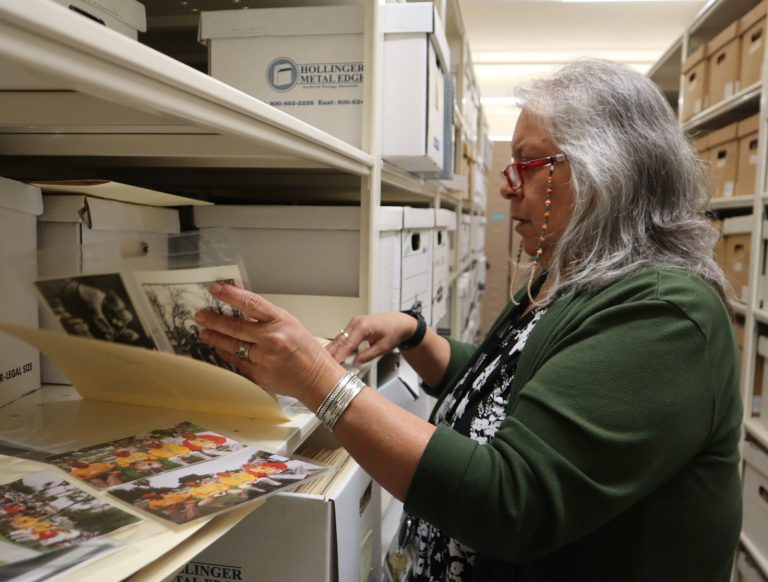
The library is able to provide the services it does in part because the staff get help from — and give help to – other divisions of the tribal government as part of a collaboration with the A:shiwi A:wan Museum and Heritage Center and census and archives offices.
“I think we can have endless conversations about collaboration, of what Zuni was like in our history, and how really, how special we are to still be here as a community, as a people,” said Curtis Quam, the museum technician and culture educator.
Some of the teamwork is simple. This winter, the library popped a couple hundred bags of popcorn for guests at a play the museum put on.
“What was cool was people were coming and they were trying to flash their money, like, ‘How much is it?’ We’re like, ‘It’s free.’ ‘It’s free?’ So we’re like, we need to think about having this as a fundraiser,” Bellson said.
Tribal libraries are funded by a mix of federal, tribal, and state dollars. On that front, she’d like to see a change to the Rural Library Endowment Fund, which state lawmakers have appropriated over $30 million to since they created it in 2019.
Zuni’s library doesn’t benefit from it. The funding is only available to libraries serving populations of 3,000 or fewer. Bellson hopes the Legislature will eventually raise that limit.
“I think we’re the little hidden gem, the shiny turquoise that it can be for our community,” Bellson said. Given the work they’re already doing, she said, “imagine what could happen” with more resources.
Below, hear more from Bellson and Quam, plus folks working in the tribe’s census and archives offices.
This story was originally published by New Mexico In Depth.