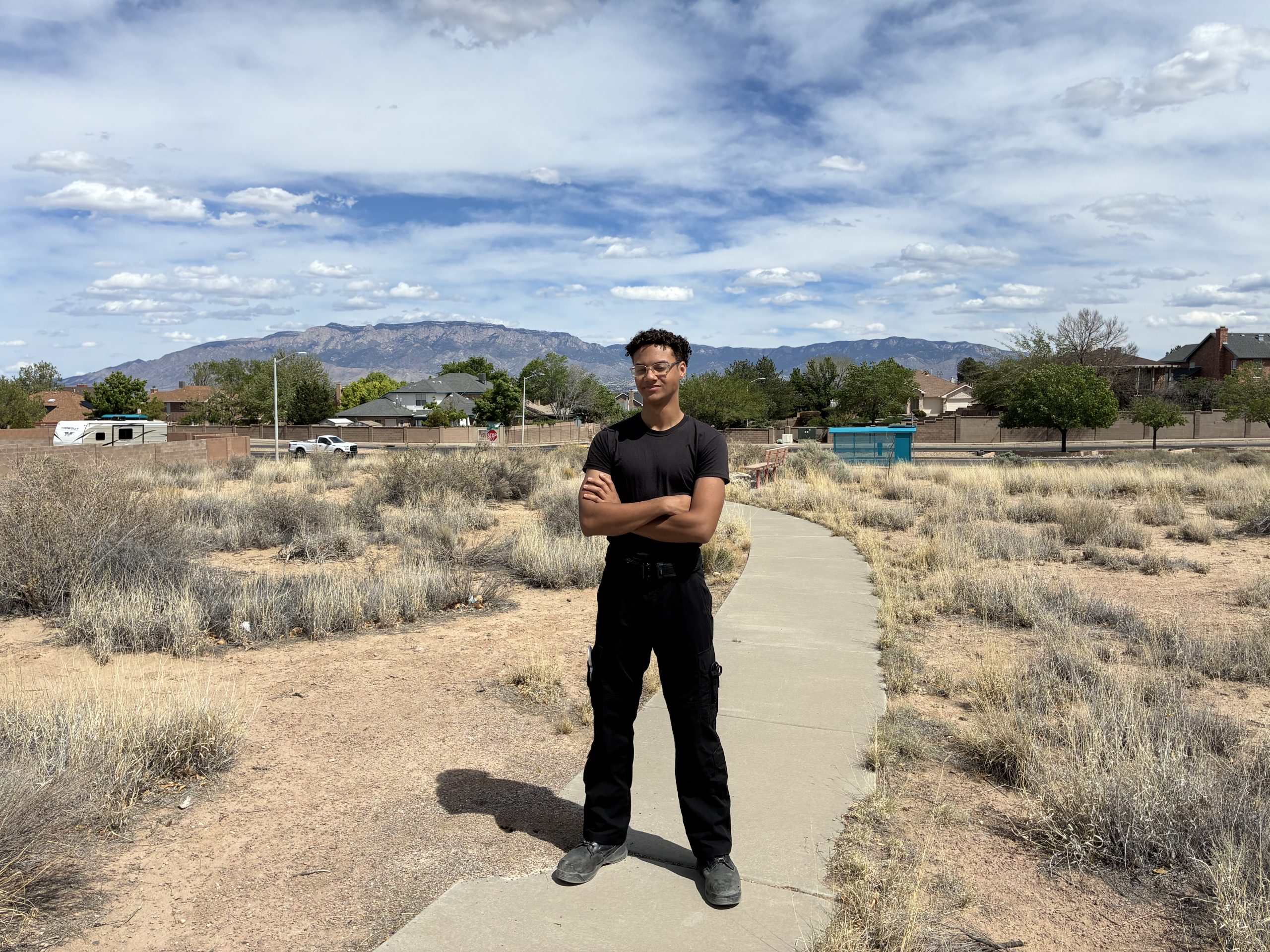
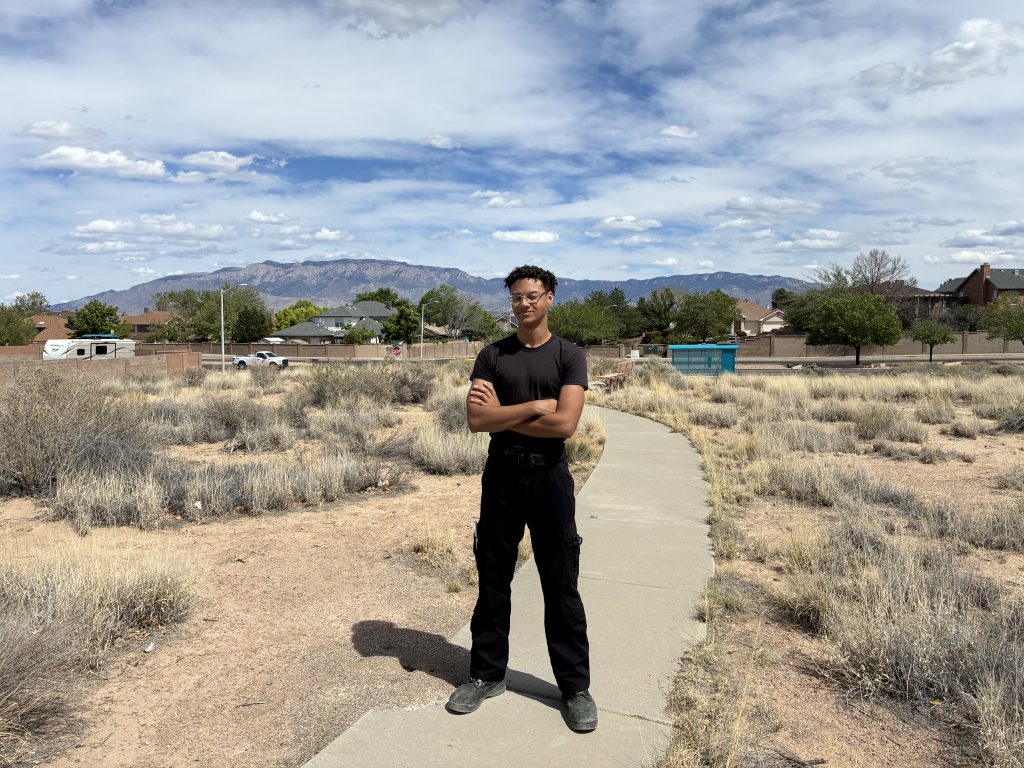
Emergency Medical Technicians (EMTs) are often the first on the scene when someone is critically injured or unwell before they’re transported to a hospital. It’s a fast-paced job, according to Valencia County EMT James Luckett, where you have to keep your wits about you to meet the emerging needs of patients.
Full disclosure, I went to high school with Luckett. I caught up with him to learn about the role of an EMT, how he got into it and how he perseveres when it gets stressful.
“It’s pretty scary if you don’t have the police department on scene with you and you hear a call come out that someone wants to kill somebody and you have to take them to the hospital,” Luckett said.
That is just one of the many things Luckett has experienced, even though he’s pretty new to the profession. He started out in the field just two years ago, but has already worked his way up to become an Advanced EMT, which Luckett said comes an array of responsibilities.
“I lead the truck, lead scenes, I can start IVs, give fluids, give certain medications,” Luckett said. “But my biggest role is to just be the leader on that truck.”
Luckett said he decided to become an EMT because he didn’t want to work a job where he would be sitting behind a desk. He wanted to be active.
“Initially I wanted to join the military, but I did not want to leave the country,” he said. “So, the second best option was emergency medicine.”
While not behind a desk, Luckett said he does find himself sitting around at the station at times, waiting for a call to come in. When it does, he said he can find it stressful but can’t let that get in the way of the tasks in front of him and the well-being of the people who’ve called him, who need him to stay focused.
“As you progress through the field, you don’t quite get desensitized to it,” Luckett said. “But it becomes more of a thing you’re used to that you can handle in that situation, so then you can get your job done.”
EMTs see and experience a lot of different scenarios on a single shift. Luckett said he has to be prepared for things that he’s never before encountered.
“You have to not be afraid to do what you need to do,” he said. “There’s a lot of skills that I have learned in school that I haven’t done in the field, but you have to be confident in those skills that you have in place.”
Not every call an EMT goes on will go according to plan, Luckett said, but there are certain contingencies they can fall back on if things go awry.
“It’s not very often that you’ll have a mistake happen, but when it does you just kind of have to go back to your schooling, follow your main things,” he said. “We have this thing called “ABCs”: airway, breathing, circulation. If you ever get confused then you can always fall back on that.”
At some point, Luckett said, he’d like to work to become a paramedic.