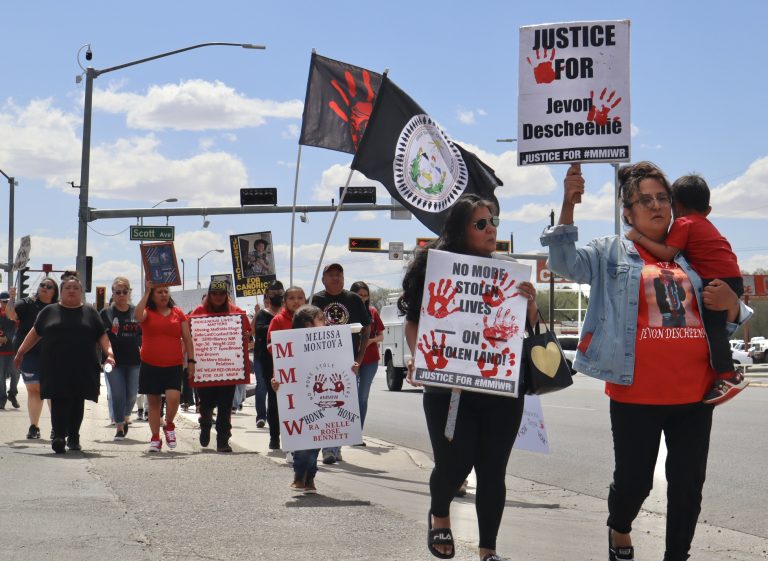
A state task force on missing and murdered Indigenous people is considering legislative proposals that carry a price tag of about $1.1 million.
One idea is financial support for things like medical care and counseling for Indigenous violent crime survivors and families of murdered Indigenous people through the New Mexico Crime Victims Reparation Commission. Another proposal is funding for an investigator in the Office of the Medical Examiner who would review cases of missing Indigenous people and help identify unclaimed human remains.
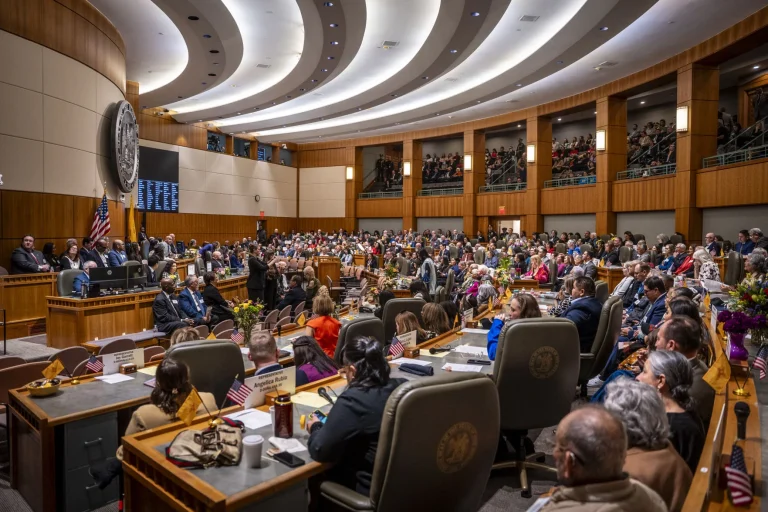
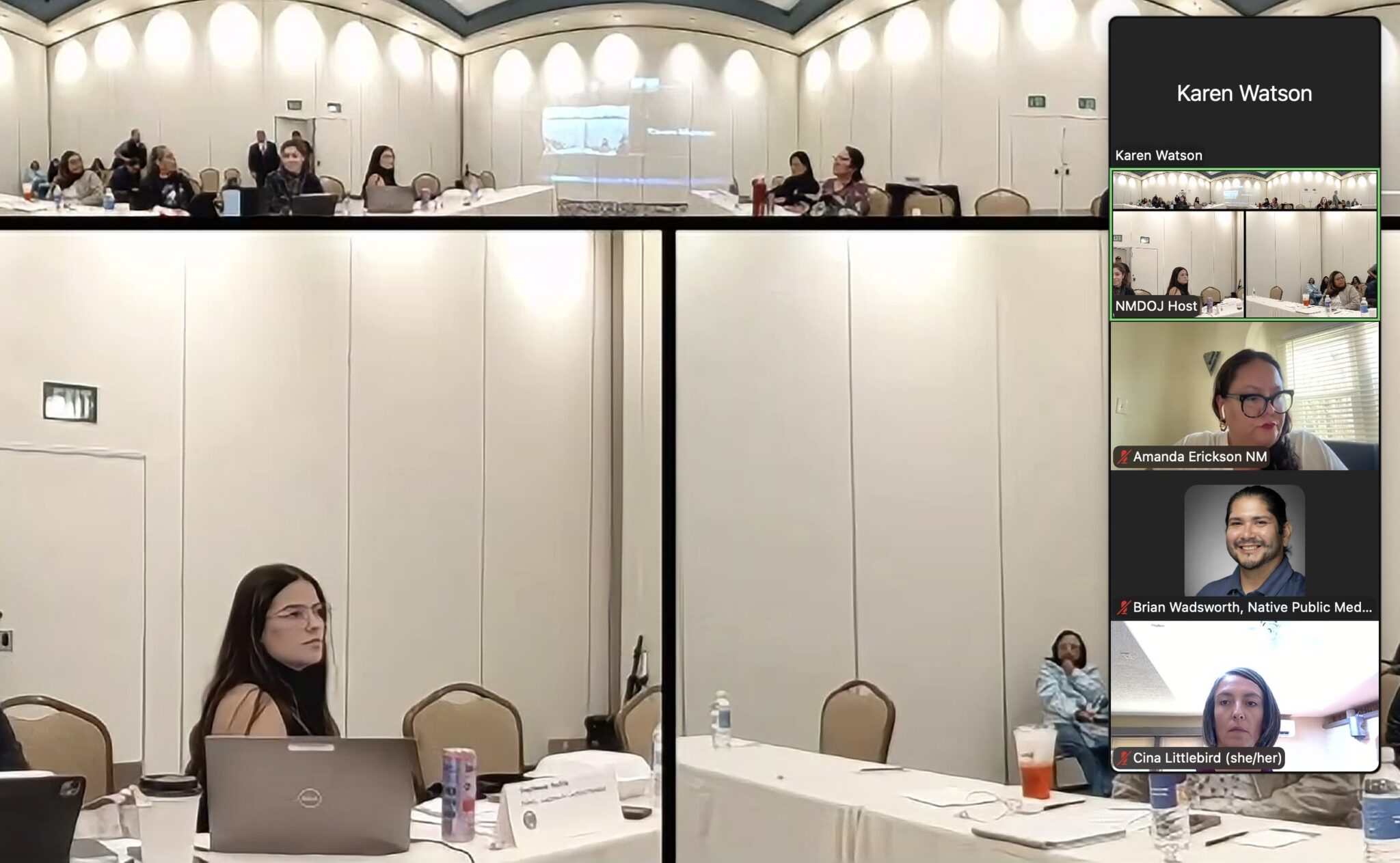
Chair Stephanie Padilla (Isleta Pueblo) listed the proposals during a meeting of the New Mexico Department of Justice’s task force on Friday in Mescalero. Padilla plans to present whichever proposals the rest of the task force signs off on to the interim Indian Affairs Committee before the legislative session kicks off in January.
A document shared by the agency with task force members and, later, New Mexico In Depth, outlines the proposals and how they each connect to a state response plan issued in 2022.
Padilla said the ideas came out of feedback people have offered since the task force started meeting in late 2024. State lawmakers called on Attorney General Raúl Torrez to create the group after New Mexico In Depth’s reporting in 2023 that Gov. Michelle Lujan Grisham’s administration had disbanded a task force that issued the state response plan.
“We’ve been listening to all of you over the last two years now, and we’ve basically compiled all of your concerns, questions, comments,” said Padilla, a child welfare attorney for Isleta Pueblo. “We’ve edited the state response plan to reflect that, and we’ve also used those to come up with these legislative recommendations.”
The task force is also considering asking the Legislature to give the Department of Public Safety money to hire an employee to study and recommend ways for law enforcement agencies to give officers from other agencies the authority to work across jurisdictional boundaries. Questions about which agencies have jurisdiction in a case can complicate investigations into missing or murdered Indigenous people. Another potential funding request is for victim advocates in that agency who could offer emotional support to survivors and information about resources.
The state response plan’s findings included a need for greater coordination between federal, tribal, state and local law enforcement and more support for crime survivors.
And keeping the task force going but reducing it by an unknown number of members made the list of potential proposals. Current members include law enforcement, state legislators and a couple advocates who have lost loved ones to the crisis.
The task force’s Friday agenda included a vote on the proposals, but that got moved to a meeting later this month after Padilla said she didn’t think there was enough time to discuss them on Friday.
Earlier in the meeting, advocates said the task force should’ve shared the proposals publicly in advance. Amanda Erickson (San Carlos Apache) said she contacted the task force before the meeting to ask about the proposals and was told they would be disclosed after the vote.
“It’s a great reminder that this task force is born from a crisis that has silenced Native community members, and so really trying to find a way to open up that communication and to ensure that you can hear from not only affected family members but also concerned community members that are interested in collaborating and working with the task force,” Erickson said. She’s the director of “She Cried That Day,” a documentary about violence against Indigenous women, particularly in New Mexico.
Padilla encouraged members of the public to share their thoughts on the potential proposals. Her email address is Stephanie.padilla@isletapueblo.com. Feedback can also be sent to Michael Kiehne (MKiehne@nmdoj.gov) and Danica Cotov (DCotov@nmdoj.gov) with the NMDOJ’s Indian Affairs Bureau.