While late monsoon rains brought the wettest September on record, experts say the effects of the drought are likely to persist and there may be long-term consequences for the bosque ecosystem.
According to the National Integrated Drought Information System, 30.3% of the state is experiencing moderate drought conditions and only 18.3% of the state is in severe drought. These are serious drops from the drought classifications from before the rains — just weeks ago, 69.8% of the state was facing severe drought and 40.9% was in extreme drought.
But a few weeks of rain doesn’t change the fact that the dry spell is at historic levels. “The last time we had drought of this magnitude was in the 1500s,” said Matthew Hurteau, director of the Center for Fire Resilient Ecosystems and Society.
He is able to measure the tree rings to see how much growth a tree has experienced during its growing season. When trees don’t get enough water they don’t grow a lot, creating narrow rings which the scientists can measure.
While it is normal for drought conditions to vary from year to year, Hurteau said, high temperatures worsen the stress on vegetation. The atmosphere functions as a sponge, drawing water from ecosystems; when temperatures are high, the atmosphere holds more moisture.
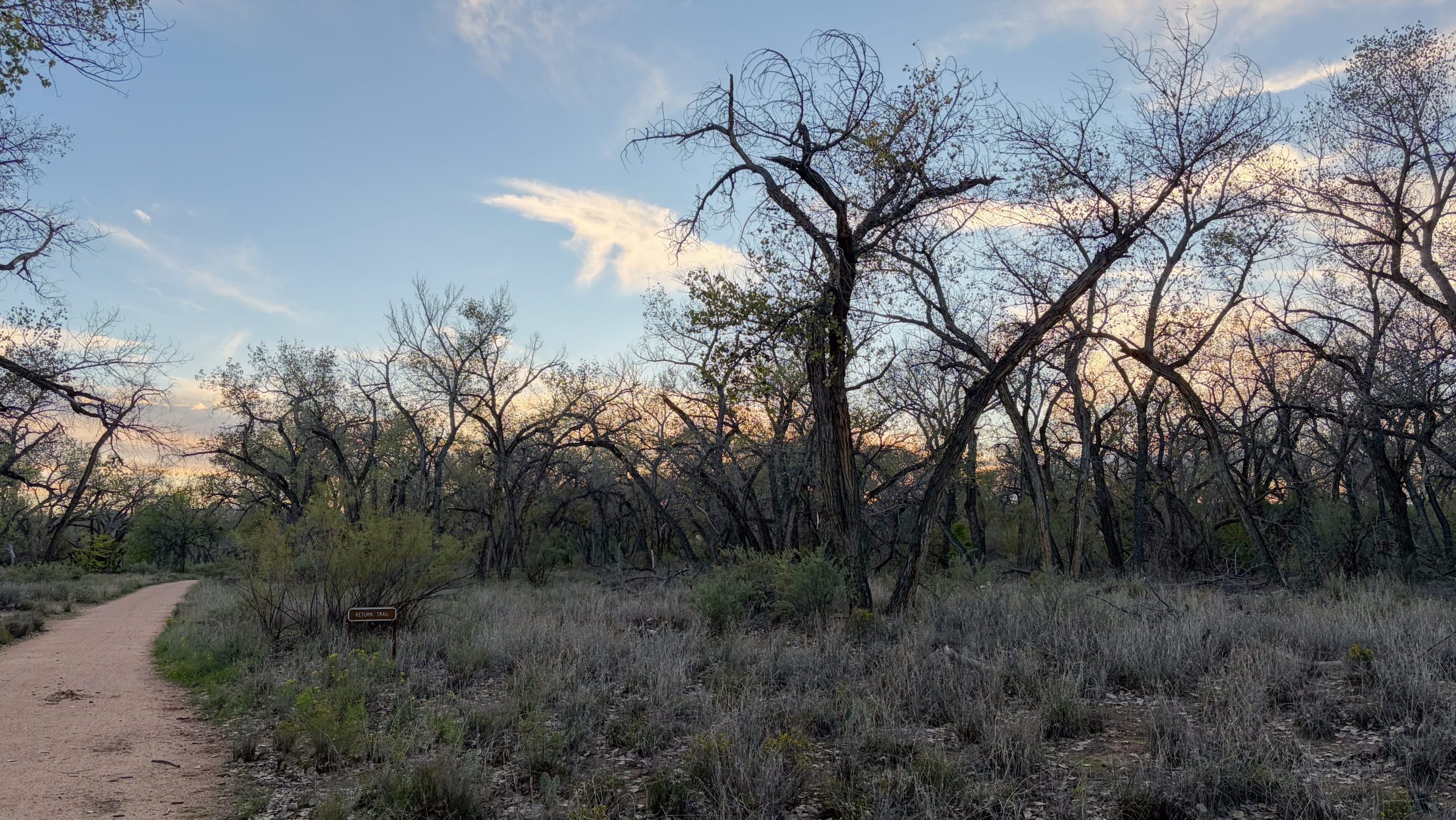
Albuquerque’s stretch of the Rio Grande is lined with stately cottonwood trees that normally light up in a blaze of yellow in October. But this year the trees started dropping their leaves at the end of July, months earlier than normal.
According to Hurteau, when cottonwood trees don’t keep their leaves long enough, they are not able to store enough carbohydrates to drop their leaves in the next season. “I wouldn’t be surprised if this is what kills them this year,” he said.
The trees’ age also impacts their ability to handle drought stress.
Cottonwood trees normally live between 80 and 100 years, and many of the trees in the Rio Grande Nature Center State Park are approaching the end of their lifespan, leaving them more vulnerable.
Park superintendent Levi Dean explained that the combination of drought, disease and mistletoe invasion have caused the trees to struggle and drop more of their limbs.
“The cottonwood is kind of the keystone tree for the riparian forest habitat in the middle Rio Grande,” Dean said. The trees provide habitat and shelter for a wide variety of species, as well as creating shade from their canopy for those plant and animal species that live on the forest floor.
If there are fewer cottonwoods in the bosque, invasive species such as the Siberian elm, tamarisk and Russian olive could take over. The decline in cottonwoods could also result in the northern migration from species such as the screwbean mesquite and the Arizona ash that are native to hotter climates in the south.
A hotter, dryer riverside with fewer cottonwoods could also increase fire risk in the bosque.
Dry limbs, dead trees and highly flammable nonnative species create high fire risk for homes, schools and businesses. While drought conditions have lessened, it is still important to reduce the flammable material around properties and to follow Firewise preparation steps Dean and Hurteau said.
The true impact of the historic drought may become more apparent next spring, when the cottonwoods usually leave their dormant state to sprout and flower.
“It’s up to us to be adaptable,” Dean said. “Nature will still be there, plants and animals will still be there. It just may look a little bit different over time.”