Zoe Naylor and Isabella Campbell, Statehouse Reporting Project
Some state legislators are using the release of the Jeffrey Epstein files as an opportunity to expand the statutes of limitations for child sexual abuse.
As more lawmakers recognize that survivors can take years to disclose crimes because of trauma, fear and manipulation, the bills would extend the timeline in which legal action can be taken — some for criminal charges and others for civil claims.
The federal Epstein Files Transparency Act was signed into law Nov. 19, requiring the U.S. Department of Justice to release all unclassified, nonvictim records in searchable format relating to the investigation of Epstein and Ghislaine Maxwell.
The Justice Department has not released all of the documents, but so far, the records in public domain — though heavily redacted — revealed systems of sex trafficking and sexual violence, often against minors. Extended statutes of limitations would mean that victims of sex crimes have more time to report crimes and pursue charges against abusers, or file civil claims to seek accountability through the courts.
National response to the scandal has resulted in federal legislation like Virginia’s Law, which would end the statute of limitations for adult survivors of child sexual abuse in civil lawsuits and would apply retroactively.
Named after Virginia Roberts Giuffre, a survivor of Epstein’s sex crimes and an anti-sex trafficking advocate, the law would also allow sexual abuse survivors to seek damages and legal fees. Giuffre wrote “Nobody’s Girl: A Memoir of Surviving Abuse and Fighting for Justice,” a book detailing the sexual abuse she endured for years. Giuffre died by suicide in 2025.
The federal bill is in committee.
This year, at least eight states are considering legislation directly related to statutes of limitations, and at least 10 have seen other types of proposed protections for survivors of sexual abuse or assault, especially relating to children.
Statutes of limitations
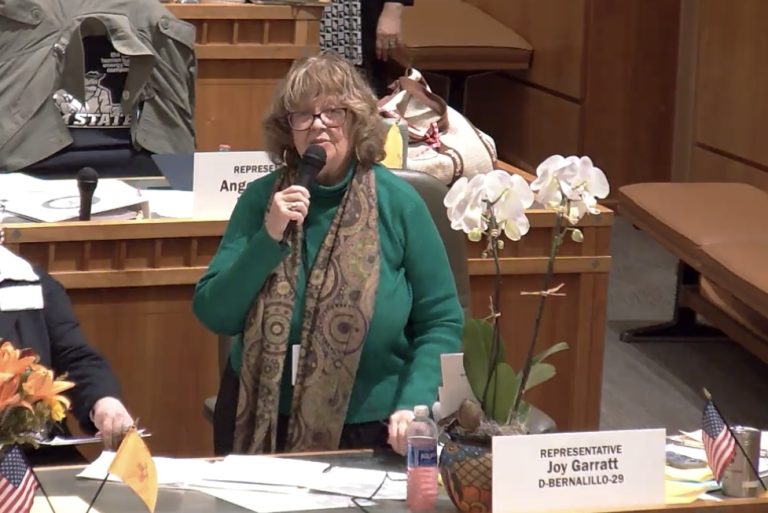
New Mexico lawmakers passed a bill in February that eliminates the statute of limitations on certain felony sex crimes committed against children. The bill passed nearly unanimously, and Gov. Michelle Lujan Grisham signed it into law on March 4.
The measure, Senate Bill 41, removes the six-year limit for prosecuting criminal sexual contact of a minor in the second degree, which is defined as intentionally touching or applying force to the “unclothed intimate parts” of a child.
It does not work retroactively or revive cases where the statute of limitations expired before the law takes effect, however.
“SB41 reflects the evolution in our understanding about how trauma works and what we know about disclosure,” said Alexandria Taylor, executive director of the New Mexico Coalition of Sexual Assault Programs. “The governor signing SB41 into law reflects the direct asks of survivors, that surviving childhood sexual abuse not have a timeline for accessing justice.”
In Missouri, legislation to protect survivors of sexual abuse has been proposed in both chambers.
Senate Bill 1140 would extend the statute of limitations for civil actions against child sexual predators. Currently, when a victim is 21 years old, they have 10 years to bring action against the offender.
The bill would double the number of years people are able to press charges to 20 years. House Bill 1664, which mirrors those provisions, passed the House on March 11.
Missouri Senate Joint Resolution 93 would allow retroactive civil lawsuits on childhood sexual abuse cases. The resolution would carry the force of a law and alter the state constitution.
Studies on childhood trauma show that it can take 20 years or more for survivors to come to terms with their childhood sexual abuse.
“By assigning an arbitrary statute of limitations for child sexual abuse, we are siding with abusers and perpetrators over survivors and making Missouri a sanctuary state for pedophiles,” Sen. Brad Hudson said.
The resolution, and a similar one in the House, are awaiting floor action in their respective chambers.
Nondisclosure agreements
Trey’s Law is another example of legislation that aims to bring justice for survivors of childhood sexual abuse. It would prohibit the use of any nondisclosure agreements that prevent the exposure of these crimes.
The federal version of the bill, which also stands for Terminating Restrictive Enforcements of Youth Settlements, was presented by U.S. Sen. Ted Cruz, R-Texas, on March 3.
Trey Carlock, after whom the bill is named, survived sexual abuse at a Christian sports camp in Missouri and died by suicide in 2019.
In Missouri, the legislation was signed into law in June. It does not cover cases retroactively.
Carlock’s sister, Elizabeth Phillips, testified in front of a Missouri House committee on Feb. 18. She said the nondisclosure agreement from Camp Kanakuk “silenced him to his grave.”
“Missouri still has a pedophile problem,” she said.
Similar bills have been proposed in other states, including Ohio, Georgia, Kentucky, Kansas and Mississippi.
Kansas’ version of Trey’s Law is one of two bills introduced this year related to child sexual abuse. It has passed in the House and is being considered by a Senate committee.
“When survivors are forced to sign a nondisclosure agreement, it silences them, which prevents them from healing,” said Lindsay Hawthorne, the digital media and communications manager of Enough Abuse, in one of the provided testimonials for Trey’s Law in Kansas.
“It allows the institution and the perpetrator to escape accountability, and for the institution, it allows them to cover it up without having to make meaningful changes,” she said.
Hawthorne said child sexual abuse is an epidemic, and it’s not limited to billionaires and private islands. “It’s something that happens in every school, every community — in red states and in blue states, in urban and rural communities, in white communities and communities of color.”
When compensation is requested in these lawsuits, it is often for emotional damages, she said.
“Many survivors experience a lot of emotional turmoil, and they may miss work. They may need money for therapy,” she said.
Tess Ramirez and Kim Bergman, co-organizers of Protecting KS Children from Sexual Predators, advocate for legislation to help survivors of child sex abuse.
Ramirez explained that if nondisclosure agreements are involved in cases like these, it could impact victims’ ability to talk with a therapist or doctor about what happened to them.
“If you can’t get treated for it, you can’t ever heal from it,” she said.
Education and prevention
Kansas is one of 44 states that eliminated the statute of limitations of criminal child sexual abuse cases, which has been the case since 2023, according to The Children’s Justice Campaign.
Erin’s Law is the second Kansas bill that aims to address child sexual abuse this legislative session. With a focus on educating instead of prosecuting crimes, the bill aims to implement programs in school districts to train children on how to identify child sexual abuse.
“I think the Epstein cases are shedding light on a problem that has always existed in our society,” Bergman said. “I could see where Erin’s Law could help prevent future Epstein situations from happening if we’re teaching kids early on about grooming and inappropriate behavior.”
This article was produced through the Statehouse Reporting Project, a collaborative effort by collegiate journalism programs across the country. The story was reported by Zoe Naylor, a reporter and journalism master’s student at the University of Missouri. Arien Roman Rojas of the University of Kansas, Isabella Campbell of the University of New Mexico and Jordan Davis of the University of Missouri contributed.