by Zoe Naylor and Cassandra Chavez, Statehouse Reporting Project
A perfect storm has arrived on the ledgers of many state budgets, bearing down on the people who often need help the most.
Federal and state policy decisions, the end of pandemic aid and long-term fiscal trends — such as people aging into Social Security benefits — are requiring states to take a tougher look at their financial plans than they have in the past.
President Donald Trump’s One Big Beautiful Bill Act is weighing heavily on legislators, who face having to make up for billions of dollars the bill cuts out for states to help fund programs, such as Medicaid and the Supplemental Nutrition Assistance Program, that allow low-income people to receive health care and pay for groceries.
At the same time, states are grappling with the end of federal funds they had been receiving since 2021 as part of the Coronavirus Aid, Relief and Economic Security Act and the American Rescue Plan Act.
The combination will leave lawmakers in many states grappling with ways to lessen the impact on Americans.
Potential Medicaid cuts
Kansas is projected to lose more than $3.9 billion in Medicaid funding over the next 10 years, according to a report by the United Methodist Health Ministry Fund and Reach Healthcare Foundation, both based in the state.
David Jordan, president and CEO of the United Methodist Health Ministry Fund, said he does not expect the state to backfill the federal cuts to Medicaid and SNAP.
“It’s really going to trickle down to Kansas in a way that just makes (residents’) lives harder economically. It’s going to make it tougher to get those supports like Medicaid or help putting food on their table, which is really too bad,” Jordan said.
The federal cuts to the program could leave more Kansans uninsured. That means hospital would then receive less in reimbursements, which could lead to higher medical costs and potential closures, according to the United Methodist Health Ministry Fund and Reach Healthcare Foundation.
Kansas Gov. Laura Kelly’s fiscal year 2027 budget lays out plans to designate $15 million to handle the increased caseload in the Children’s Health Insurance Program to help maintain health coverage for children.
In Arizona, legislators have three budgetary options going into the session: go above and beyond to conform with the bill, do the bare minimum or not conform at all.
“In the six years that I’ve been here, this is the first time that we have not gone into session saying, ‘Yeah, we’re going to rubber-stamp conform to the federal and keep right on marching,’” said Rep. Stephanie Stahl Hamilton, D-Tucson.
She said the biggest impact of Trump’s bill will be felt in health care and that social services, Medicaid, food and other benefits would be hit hard. The state does not have enough “rainy day” funds to backfill the programs that will be impacted by the bill.
Tax increases might seem to make up the difference, but they are very difficult to pass as they require a two-thirds vote, according to Dennis Hoffman, professor of economics at Arizona State University.
“We’re going to cut income taxes again this session to conform with the Big Beautiful Bill,” Hoffman said. “So, it just means that there’s less limited resources to go around to support other things.”
Systemic changes to Medicaid will require almost 200,000 Arizonans to submit paperwork to Arizona’s state Medicaid service, to keep their coverage. That’s because a major aspect of Trump’s bill is that enrollment in Medicaid will require workforce participation or participation in another qualifying activity, like education or a work program. States must implement that condition by Jan. 1, according to the Center for Health Care Strategies.
The Grand Canyon Institute, a bipartisan economic think tank, analyzed the state’s three main options.
Significant conformity with the new regulations would create a deficit of more than $300 million and cut funding to other agencies, according to the institute. Minimal conformity would leave a small surplus but would not fund all other priorities, and non-conformity would fund other state agency priorities but risk penalties for being out of compliance with the new regulations.
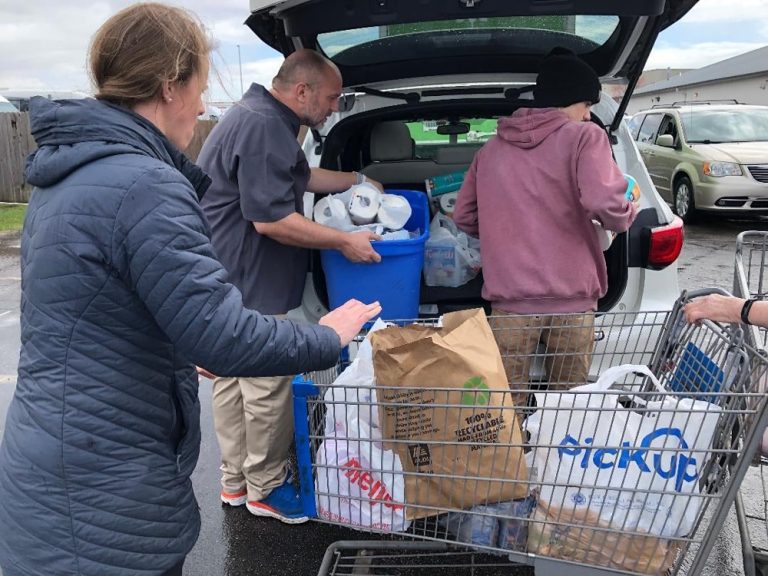
SNAP
As Tennessee expects to face a tighter budget in the next fiscal year, lawmakers are moving to seek federal funding through the federal Summer Electronic Benefit Transfer program after Republican Gov. Bill Lee declined to opt in for the second consecutive year.
Lee’s decision has left hundreds of thousands of Tennessee children not receiving school meals during the summer. The legislation would require Tennessee to participate as long as the federal program remains available.
The program provides grocery benefits to families who receive free school meals. It served about 700,000 Tennessee students during its nationwide rollout in 2024.
In its absence last summer, the General Assembly created a “Tennessee Summer Nutrition Program” funded by a $3 million grant, which reached only about 18,200 children statewide.
Advocates have said the loss of Summer EBT will increase child hunger and negatively affect local economies, particularly in rural communities, by removing federal food dollars that support families and grocery stores statewide.
“Some of these students are receiving breakfast and lunch from school five days a week. … That’s an extra 10 meals a week (per child) that families are having to provide with no additional support,” said Anna Grace Breedlove, anti-hunger policy coordinator at the Tennessee Justice Center.
The governor has until Sunday to opt into the program for next summer.
State of the budgets
In addition to federal funding cuts, some states are encountering rough waters as revenue, the workforce and the cost of living fluctuate.
In Virginia, newly sworn-in Democratic Gov. Abigail Spanberger’s proposed budget aims to offset expenses for housing, health care and energy costs.
Spanberger campaigned on affordability, but Republicans want to put money back into people’s pockets by cutting certain taxes.
“Prices have been rising for years,” Spanberger said. “But the economic uncertainty and instability coming out of Washington (D.C.) over the past 12 months, particularly for Virginia, have made things undeniably worse.”
The state has one of the highest rates of federal workforce reductions in the nation, with almost 24,000 jobs cut last year.
Despite the reduction in the federal workforce, state Republicans point to the state’s unemployment rate, which is lower than the national average.
In Colorado, as the state faces an estimated $850 million budget deficit this year, two legislators showed fundamental differences in how to handle finances at a legislative preview meeting in January.
State Sen. Barbara Kirkmeyer, R-Brighton, who is running for governor, has criticized the current Democratic administration and called for spending cuts.
“Colorado’s budget didn’t break by accident,” Kirkmeyer said at the meeting sponsored by the Colorado Sun at the University of Denver.
“It broke because politicians at the Capitol keep chasing new programs and bigger government while shortchanging the basics that families actually rely on, like schools, health care providers and services people use every day.”
By contrast, Speaker of the House Julie McCluskie, D-Dillon, focused on protecting access to state services.
She pointed to the Fair Access to Insurance Requirements Plan, which helps homeowners in high-risk areas get property insurance and was passed by the Democratically controlled legislature in 2023.
In Washington state, analysts project a $2.3 billion shortfall this year, fueling contentious budget negotiations for the second consecutive legislative session.
Democratic Gov. Bob Ferguson has drawn fire for proposing to trim $800 million in state spending and pull $1 billion from the state’s “rainy day” fund, which would cut state reserves roughly in half. He has also proposed a 9.9% income tax on residents who earn more than $1 million a year.
Washington is one of nine states without an income tax, but Senate Bill 6346 and companion House Bill 2724 aim to change that. Sponsored by over 20 senators, the Senate bill follows Ferguson’s proposal and plans to tax millionaires by 9.9% of their annual income, which Democrats say could raise more than $3 billion a year.
The bill would use revenue from the tax to fund K-12 education, health care, higher education and other government services. It is currently in committee.
Republicans oppose Ferguson’s plan, seeing the millionaire tax as a gateway proposal that would end eventually in taxes being levied up and down income brackets.
Ranking member of the House Appropriations Committee Travis Couture, R-Allyn, said at a press briefing that the governor’s plans miss the point. He said Washington suffers from a “spending addiction,” so raising new revenue wouldn’t solve the problem.
Among several reductions across K-12 and higher education, Couture proposed a 3% slash to funding for the University of Washington and Washington State University, and a $14 million cut to the state’s Running Start program, which allows upperclassman high school students to take college courses. To meet the rest of the proposed reductions, Ferguson suggested cuts in Human Services, including to childcare and social work.
Some states are able to be optimistic about their budgets this upcoming fiscal year.
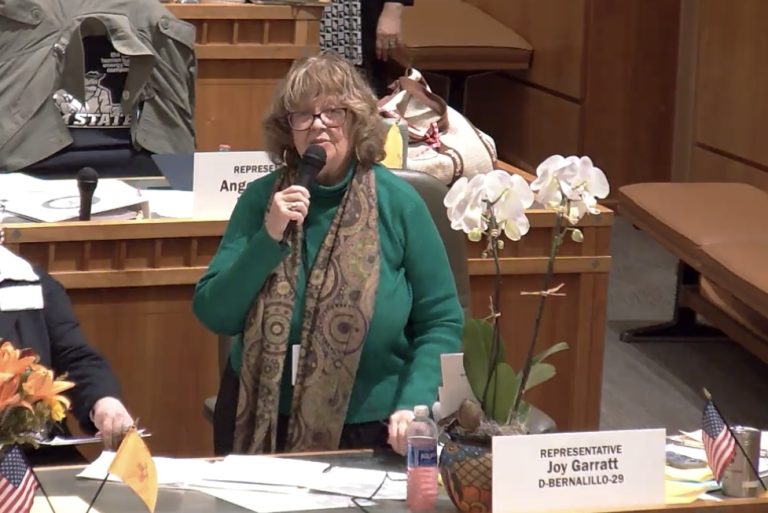
After five years of historic revenue growth from an oil and gas boom, New Mexico state lawmakers in January proposed a 2.5% budget increase.
The state has been on a multi-year streak of record-breaking income from oil and gas, and although projected revenue came in lower than expected this year, Democratic leaders are confident about spending.
“I’m grateful and excited that we have a strong fiscal position. That comes after years of planning, strategic saving and focusing on the highest-value investments for New Mexicans,” said House Appropriations and Finance Committee Chair Nathan Small, D-Las Cruces.
The bipartisan Legislative Finance Committee’s proposed $11.1 billion budget puts nearly one-third of that money in reserves to prepare for a possible downturn in oil and gas.
“We can be confident, but the uncertainty reminds us that caution is important, and that’s why we’ve been very strategic about how we budget,” Small said.
How we got here
Long-term fiscal trends, like aging populations and more expensive natural disasters, and federal and state policy decisions are key factors colliding in states’ upcoming budgets, explained Josh Goodman, a senior officer on state fiscal policy at The Pew Charitable Trusts.
He also said that almost-dried-up federal aid from the COVID-19 pandemic could affect financial planning for states’ next fiscal year.
“States have to generally balance their budgets each year. The federal government has a lot more flexibility to engage in deficit spending,” Goodman said. “So, if you have this economic downturn — some kind of crisis like COVID — then it’s typical for the federal government to offer help to states.”
One of the biggest forms of funding, totaling $350 billion, came in the State and Local Fiscal Recovery Funds — the money allocated to state and local governments during the pandemic era under the American Rescue Plan Act.
Dollars from that fund have two deadlines: to have been allocated by the end of 2024 and spent by the end of 2026.
That money is essentially gone now, Goodman said.
“I think part of the story now is: It’s not as though states have been just returned to the old status quo of federal funding. There are these new discussions going on,” he said.
Going forward
Whatever the effects on states’ budgets, federal funding changes have immediate, medium-term and long-term impacts, explained Wesley Tharpe, senior advisor for state tax policy at the Center on Budget and Policy Priorities.
Like in Arizona, immediate budget impacts include having to find “new administrative dollars” for processing costs, Tharpe said.
“States are having to do things like invest in new IT systems, hire new, full-time employees, to kind of stand up and operate these systems in ways that they’re going to have to immediately account for in their budgets,” Tharpe said.
Short-term impacts include the early stages of the Medicaid cuts that are beginning to trickle down to states, he said.
“Those are costs that are going to have to be accounted for right now, heading into states’ next fiscal year budget,” Tharpe said.
The rest of the decade will see regulation changes that are implemented gradually. “The big example here would be the SNAP cost shift requirement that states now have to take on,” he said.
Although they are a little way down the road, policy changes like these are ones that states are already thinking about, “but they have a little bit of time to basically constructively plan for,” Tharpe said.
Due to an “uneven economy” and the expiration of federal pandemic aid, Tharpe said, “States and localities were likely already gonna be facing hard choices in a lot of places, and now this huge suite of federal tax and budget changes are stacking on top of that.”
What Tharpe sees is a “fairly dire challenge,” but also “a fairly significant opportunity to show leadership on what their response to these factors is gonna be.”
This article was produced through the Statehouse Reporting Project, a collaborative effort by collegiate journalism programs across the country. The story was reported by Zoe Naylor, a reporter and journalism master’s student at the University of Missouri. Allie Fischer of the University of Kansas, Cassandra Chavez of the University of New Mexico, Audrey Lippert of Arizona State University, Evelyn Archibald of the University of Washington, Luke Purvis of Colorado State University, Kacy Lee of Virginia Commonwealth University, and Kayelyn McCaslin and Beeta Baghaevaji of the University of Tennessee-Chattanooga contributed.