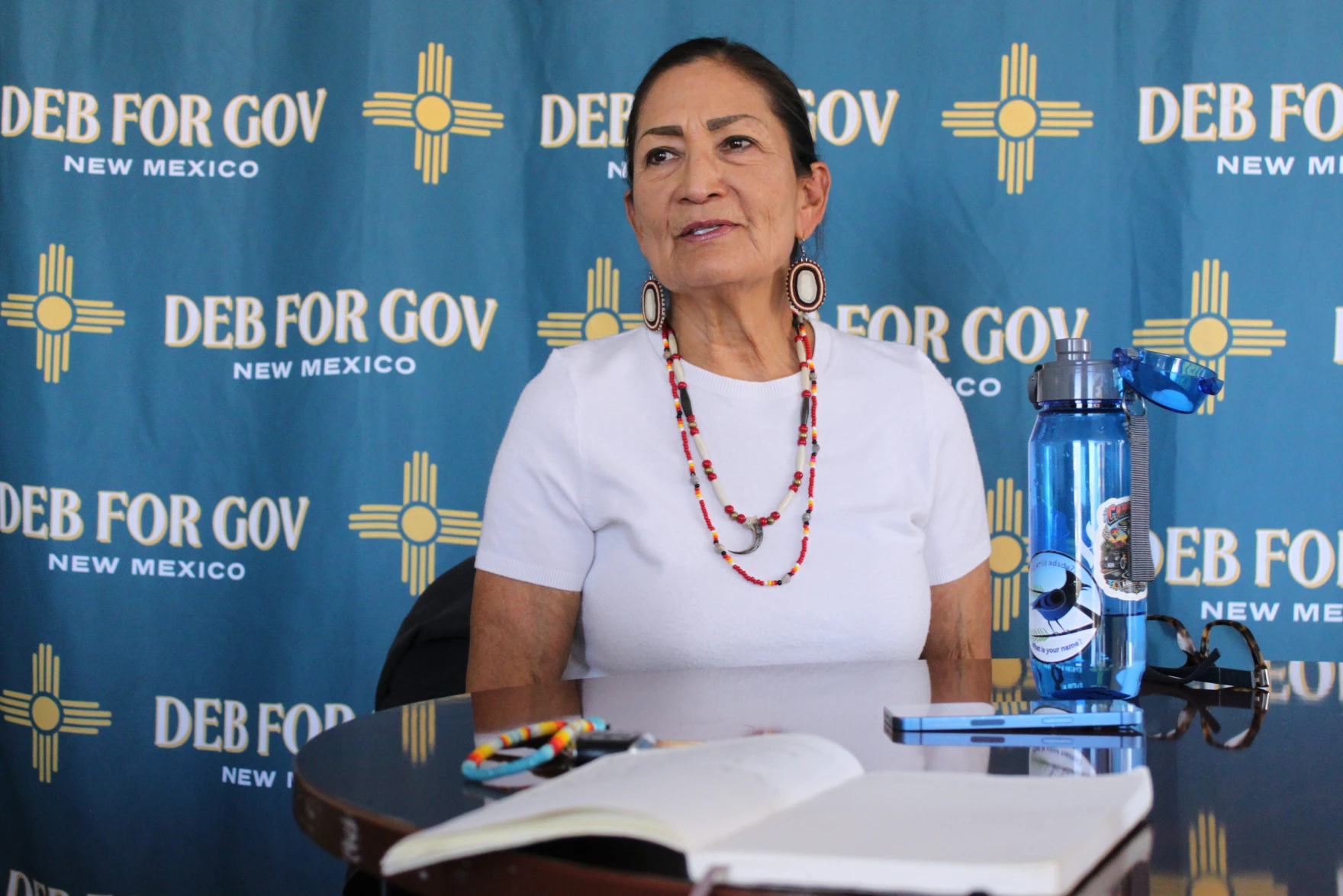
For the first time in 8 years, New Mexicans will be choosing a new governor on November 3rd. Former U.S. Secretary of the Interior, Deb Haaland from Laguna Pueblo served in the U.S. Congress and then as Interior Secretary. She told KUNM she would continue to support public education through the state’s oil and gas revenue.
DEB HAALAND: Throughout this past administration. We’ve gotten early childhood education across the finish line, and universal childcare across the finish line. So those are all programs that I would absolutely continue because they benefit New Mexicans.
KUNM: So how would you balance protecting oil and gas state revenue while also meeting the state’s climate and environmental goals?
HAALAND: So of course we will continue moving forward with our goal of net zero emissions by 2050. I would like to see us achieve that sooner, quite frankly. But here in New Mexico, we have over 300 days of sun per year, we have an abundance of wind that will never run out, and we have geothermal opportunities. So I believe New Mexico can diversify its energy portfolio in such a large way, while creating jobs and building those opportunities, and then of course, lowering utility costs for New Mexicans.
KUNM: New Mexico creates 11x more energy than citizens consume with that energy going to communities outside the state. How will you ensure that you’re prioritizing New Mexicans first?
HAALAND: When we build those wind turbines and transmission lines and solar arrays, we’re actually creating jobs. Recently, I was able to cut a ribbon on a community solar project up north near Santa Fe. So I believe very strongly that we can always prioritize New Mexicans in moving our clean energy forward, and we can power some of our most large projects.
KUNM: What would you do to help rural communities prepare for fires and the recoveries afterwards?
HAALAND: As I have often said, nature is our best ally in our fight against climate change. We need to ensure that we have healthy ecosystems that can bear the brunt of those catastrophes. I believe very strongly that we should put funding toward eradicating invasive species toward removing fuels from the forest floors and things of that nature, and quite frankly, those would be opportunities for us to actually help the federal government to live up to its responsibility to New Mexico. We have national forests here in our state, and they need to be taken care of by the federal government. That is their obligation.
KUNM: When it comes to New Mexico our needs often don’t align with the federal government’s priorities. How far are you prepared to push against the Trump administration?
HAALAND: I will hold their feet to the fire as much as can. We have 23 Indian tribes in our state. We have an abundance of public lands, national parks, wildlife refuges, BLM lands. We have Bureau of Indian Education schools. We have the Indian Health Service, the Veterans Service. We have military bases. The federal government has real obligations to our state, and they need to live up to those obligations. So I will do whatever I can to work across the aisle, if you will, to help them to realize and understand what those obligations are, and if that means you know traveling to Washington D.C. getting the meetings I need to get to press our issues there. I will. Otherwise, I know that this administration has worked feverishly to claw back funding, for example, for certain programs in some of our research institutions and so forth. And we have an attorney general who has filed lawsuits against the administration, and I would not be opposed to pressing our issues in the courts as well.
KUNM: What’s the most important difference between you and your opponent?
HAALAND: I have an abundance of experience. I was the congresswoman for District 1, where I got five bills passed and signed into law by President Trump. I was the Secretary of the Interior, where I brought millions of dollars to New Mexico for water infrastructure, to clean up legacy pollution, to move conservation efforts forward. I started a Missing and Murdered unit here in Albuquerque that addressed the crisis of Missing and Murdered Indigenous People. I have done immense work all across New Mexico as a national leader. While secretary, I managed a department with 70,000 employees and an $18 billion budget. My opponent does not have that experience. He hasn’t managed a large department. He’s managed a mayor’s staff. My ancestors have been here in New Mexico since the late 1200s. I know what it’s like to struggle here in this state, and I feel that I know very clearly what it is that New Mexicans need in this moment.
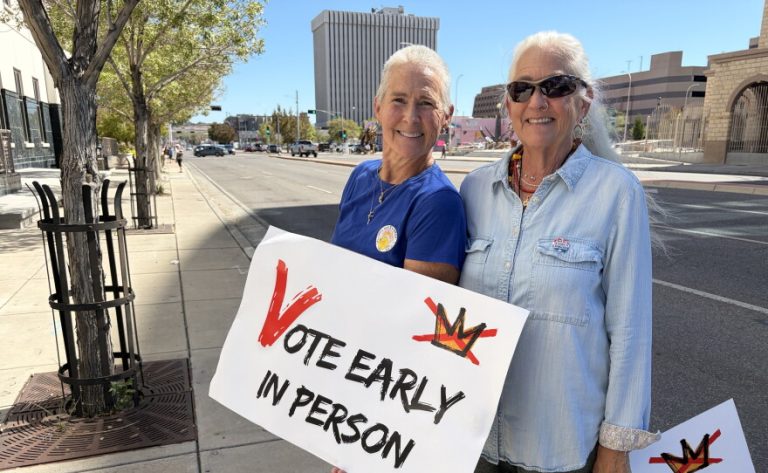
Find out more about her and her Republican opponent, Gregg Hull, at KUNM.org. Early voting ends on Saturday. Election Day is November 3rd.