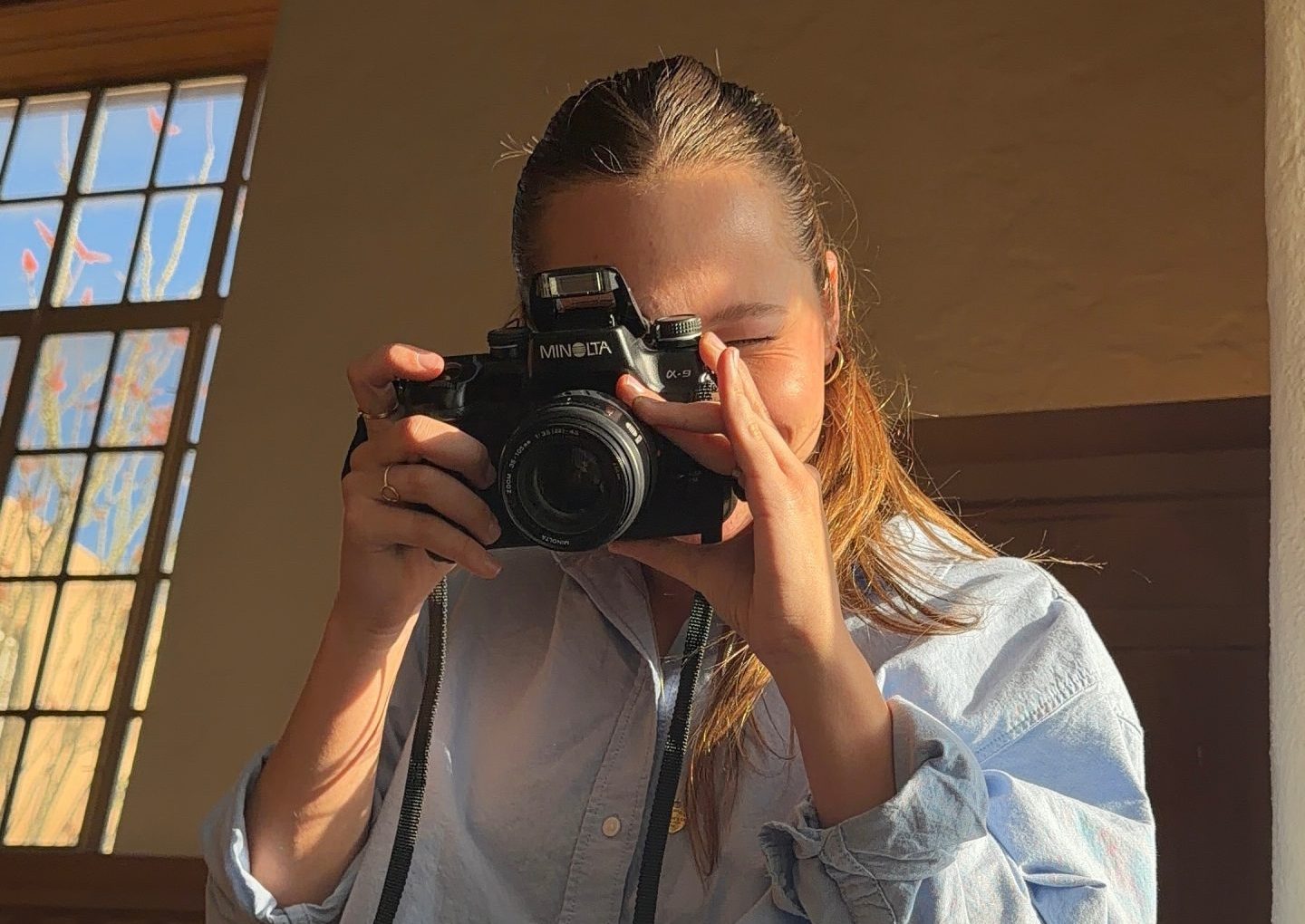
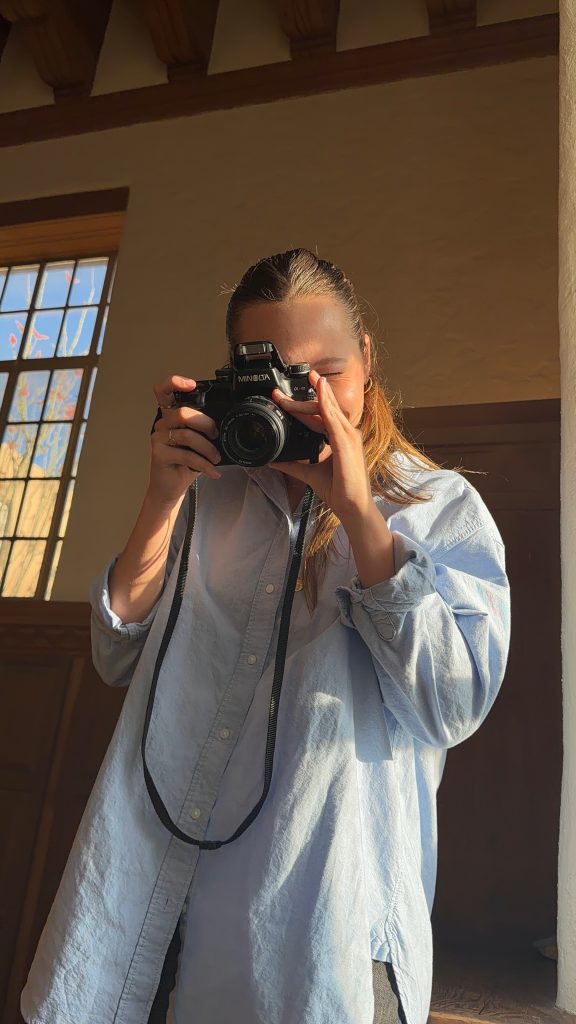
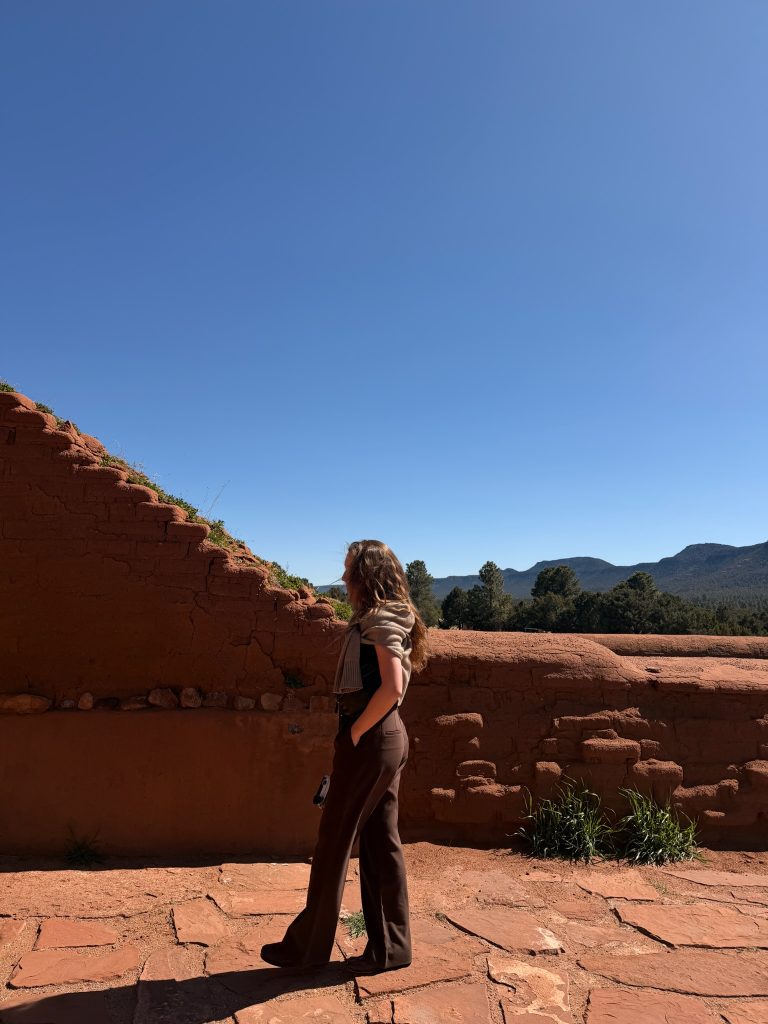
Ella Cafferkey lifts her camera, pausing for a second before pressing the shutter. There’s no screen to check, no instant preview, just the quiet click and the understanding that the moment is already gone.
In an era where nearly every memory is captured, edited and shared within seconds, a growing number of people are choosing a different approach. Film photography and Super 8 videography, once considered outdated, are re-emerging as desirable ways to document life’s most meaningful moments. From weddings to everyday memories, this analog revival reflects a deeper shift in how a digital generation is redefining what it means to remember and value.
At the center of this movement is local photographer and videographer Ella Cafferkey, whose work with film has quickly gained attention. For her, the appeal is not just aesthetic, it is emotional.
“There is a demand for Super 8 and film photography because people are craving authenticity,” Cafferkey said.
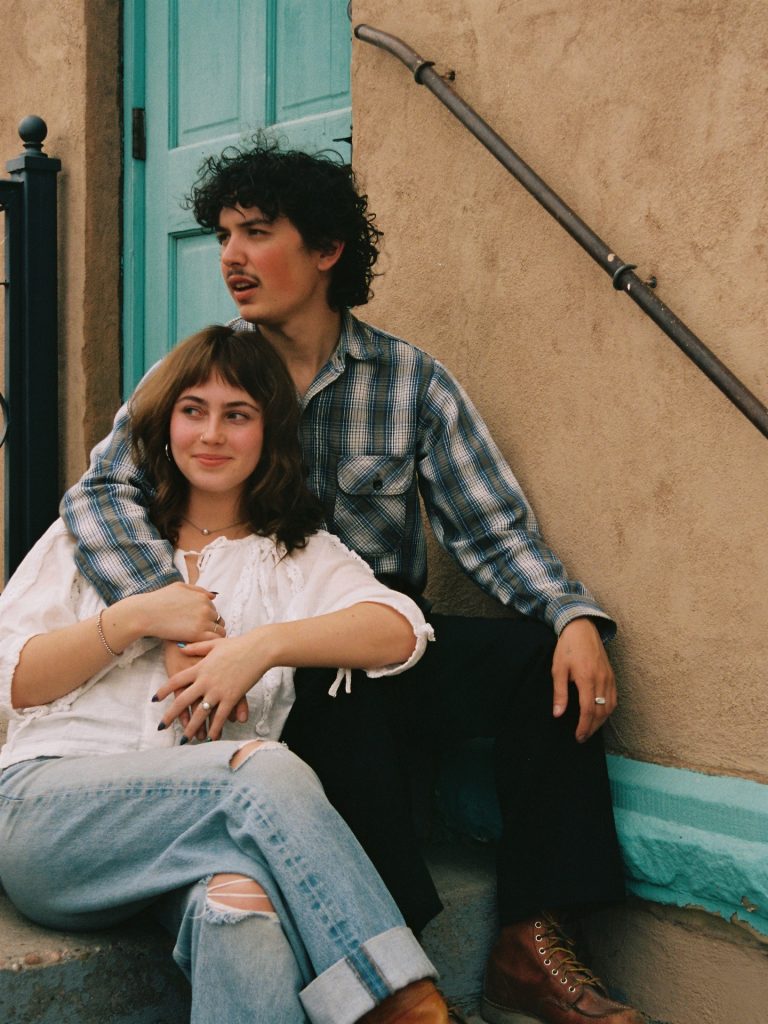
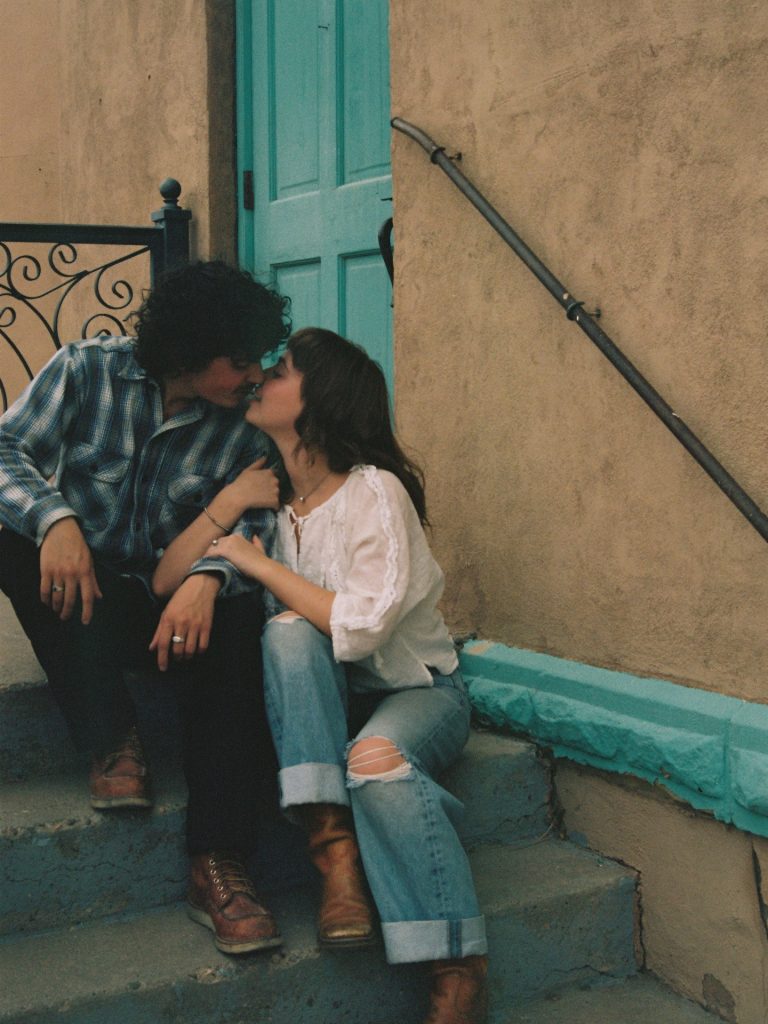
“The moments that can be captured with film are noticeably different than what is captured with digital photography or videography.”
Unlike digital images that can be endlessly retaken and refined, film offers no safety net. Each frame is finite, each moment is singular.
“Film is about the experience,” she said. “It is about knowing that this is a specific moment happening naturally that will only be captured once.”
That intentionality is part of what makes film feel so different. According to Cafferkey, the medium itself shapes the emotion behind the image.
“For me, this emotional feeling comes from the grain, the frame rates and the soft colors that are pulled from film,” she said. “Film is also more intentional because it cannot be erased. There is only a certain amount of film that can be used within a certain timeframe.”
In a place like Albuquerque, where the film industry has steadily grown over the past decade, analog work like Cafferkey’s fits naturally into a larger creative ecosystem. Productions and creative teams are increasingly incorporating film into their projects, not as a replacement for digital, but as a complement to it.
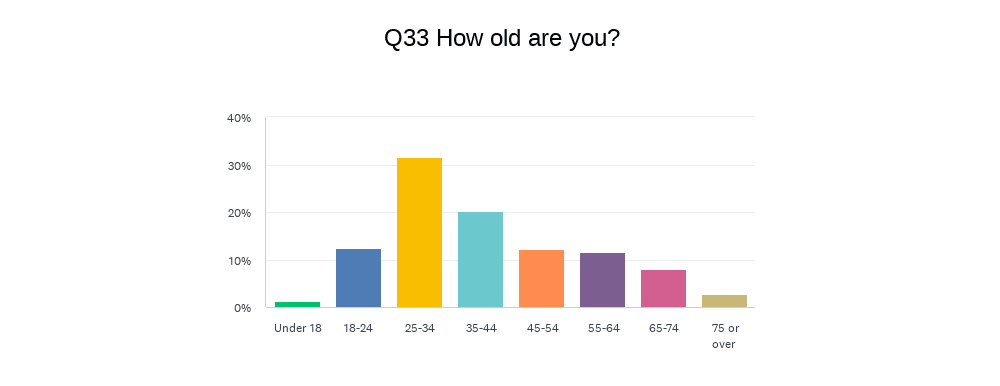
According to Ilford Photo’s 2024 film photographer survey, film photography is making a comeback, with wholesale film orders increasing by more than 127% from 2020 to 2026. A lot of this growth is being driven by Gen Z, who are drawn to the authenticity of film over the
“Analog will fit into many larger creative landscapes by intertwining it into bigger projects,” she said. “This medium will fit into projects that want the branding of Super 8 films, such as behind the scenes shots to strengthen the perceived value.”
The resurgence of film is not just happening locally. Across the country, film photography, especially in weddings, has seen a noticeable revival. According to Lomography, photographers and clients alike are turning back to film for its timeless, organic quality, with many couples viewing it as a way to create more meaningful and lasting documentation of their day.
That sense of permanence is something that resonated deeply with Albuquerque bride to be Tara Lee Lewis, who chose Super 8 film for her wedding before ever seeing a finished product.
“I knew I wanted a wedding video and I’ve always loved film pictures,” Lewis said. “I didn’t even know that you could take videos on film, so when Ella reached out it was a no brainer.”
For Lewis, the decision was not about convenience or clarity, it was about feeling.
“I love pictures but video will allow us to relive that day. Film is timeless and something I know I will love many years from now. I’m hoping it will capture how we felt that day, and capture all the love,” Lewis said.
That idea of film as something lasting, heirloom like, that holds emotional weight over time, points to a larger cultural shift, particularly among Gen Z. Often characterized as a generation driven by speed and instant gratification, many young people are now leaning in the opposite direction.
“There’s a stereotype that Gen Z prioritizes fast, digital content,” Cafferkey said. “But film photography is a slow craft with imperfections. The younger generations value this because they are oversaturated with content, noise and the look of perfection.”
Instead of striving for flawless images, film allows space for imperfection, and in doing so, creates something that feels more real and unique.
“It is a breath of fresh air to take photos or a video with friends on film that does not have to be perfect,” she said. “Living in the moment can happen more freely and that is where creativity grows.”
This desire for authenticity is also rooted in a broader sense of nostalgia. Film carries decades of cultural and historical weight. Kodak’s Kodachrome, introduced in the 1930s, became one of the most iconic color films of the 20th century, used to document everything from family memories to major historical events. Its rich tones and distinctive grain helped define how generations visually remember the past.
Today, that same visual language is being rediscovered and reimagined by a new audience.
Locally, that resurgence is tangible. An Albuquerque based photo lab recently reported a renewed interest in film development, with more customers, many of them young, bringing in rolls to be processed. What was once considered a niche practice is becoming part of everyday creative life again.
For Cafferkey, the process itself is part of the appeal.
“I capture all 36 frames or three minutes of video, and then see the development process and scanning,” she said. “There is a hopeful expectancy to receiving this film back because I do not know what it will look like until it is all said and done.”
That waiting period, something almost unheard of in digital culture, has become part of the experience.
And for clients like Lewis, that experience extends far beyond the moment the image is taken.
“Our generation craves authenticity,” Lewis said. “Super 8 will hopefully be able to capture that and will be so sweet to look back on and tell our story to show our kids one day.”
This idea of film as something to pass down, as an heirloom rather than just content, may be what ultimately separates it from digital media. It is not just about documenting life, but about preserving it in a way that feels intentional, tangible, and enduring.
“I do not see returning to film as just a trend,” Cafferkey said. “This is a bigger shift toward valuing life at a slower pace.”
As she lifts her camera again, framing another fleeting moment, there is no rush to review, no pressure to perfect. Just the act of capturing something real, knowing it will not be seen right away, if at all.
In a world built on immediacy, that pause might be the point.