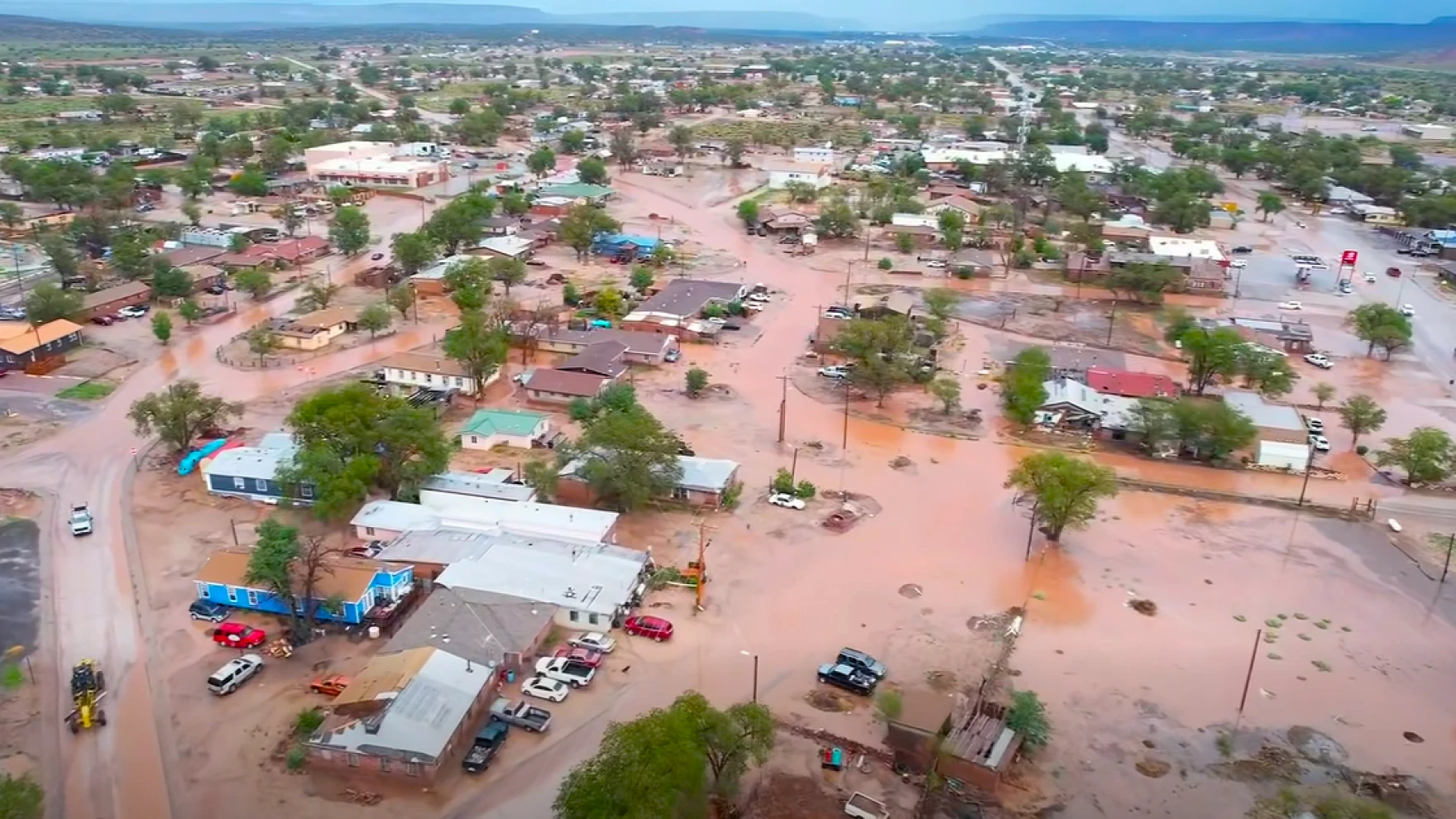
Last month Zuni Pueblo and the Navajo Nation experienced catastrophic flooding. Unfortunately a new report shows that’s not uncommon. Natural disasters caused more than $4 billion in damages to tribal communities across the nation over a ten-year period. But there’s a shortfall in economic support from the federal government to address these impacts.
The report by the Urban Institute found Indigenous communities are more exposed to hazards like hurricanes, wildfires and flooding, and also face more systemic challenges. So disasters have a greater impact.
The research was funded by the U.S. Economic Development Administration, and explores how tribes are currently handling natural disasters and what current federal resources are available.
Between 2014 and 2024, more than half of all Indigenous communities experienced two or more disasters within a two-year span. These back-to-back disasters make it difficult for communities to respond and recover efficiently.
“It could be another hurricane, it could be a wildfire, and so when there are those kinds of compounding or back-to-back disasters, it makes it really hard for any community,” said Will Curran-Groome, a research associate with the Urban Institute. “But especially communities that have you know challenges around housing stock maintenance or challenges around lots of lower income households, it makes it really really hard to recover.”
Curran-Groome said the Federal Emergency Management Agency (FEMA) has a program called Building Resilient Infrastructure (BRIC) that has set-aside funds for tribes within the program. But losses often exceed FEMA funds, or tribes don’t know how to access the resources available.
“So I think I would really encourage tribes, if they haven’t already, to really assess the landscape and to start building some of those initial relationships with contacts of federal agencies,” he said.
He said this is just one piece of a broader project. The Institute hopes to continue their current community of practice with tribes facing these issues.