By Zoe Naylor and Victor Martinez, Statehouse Reporting Project
Immigration and Customs Enforcement, whose actions have been the subject of nationwide protests and contentious online debate, is the subject of legislation proposed in states across the country.
Some bills would prohibit ICE officers from wearing face coverings, operating near schools and churches and using surveillance technology for immigration enforcement. Others would require cooperation between state and local law enforcement and federal immigration enforcement.
The topic of immigration enforcement and how it should be carried out comes up after ICE has raided several cities across the country to detain immigrants who do not have proper documentation.
After a crackdown in Minneapolis, when an ICE officer shot and killed Renée Good and federal immigration agents shot and killed Alex Pretti, the agency has received a range of responses, including anti-ICE protests and support for ICE in many state legislatures.
As of Feb. 7, more than 68,000 people are in immigration detention, with the most being in Texas. Just over 39,000 were booked into ICE detention in January, according to the Transactional Records Access Clearinghouse, a database run by Syracuse University.
In at least 21 states, lawmakers have proposed regulations for how state and local law enforcement officials must interact with ICE — some requiring cooperation with the federal agency and some prohibiting it.
Lawmakers who want to reign in ICE operations have proposed legislation prohibiting state and local law enforcement from cooperating with the federal agency.
Those who have proposed pro-ICE bills want to allow 287(g) agreements, a program that allows state and local law enforcement to enforce immigration laws, too.
Several bills in favor of cooperating with ICE reference the Laken Riley Act, which requires the Department of Homeland Security to detain non-U.S. nationals who have been arrested for crimes like theft and larceny. State bills referencing the legislation would extend the same requirements to the state, mandating immigration detainers for specific offenses including federal crimes or crimes of violence.
Cooperation between state and federal law enforcement
A major point of discussion in legislatures is the extent to which state and local law enforcement ought to cooperate with ICE. Many states and municipalities are voting on whether they will enter 287(g) agreements.
In Maryland, a law banning 287(g) agreements has passed, requiring termination of any immigration enforcement agreements by July 1. Bills against cooperation with federal immigration enforcement have been seen in states including Minnesota, Kansas, Arizona, New Mexico and Virginia.
In Minnesota, Republican and Democratic legislators are at odds over how to handle ICE’s presence even after a Feb. 12 announcement that the crackdown called Operation Metro Surge would end.
Three bills include prohibiting government entities from acquiring and using facial recognition technology; placing restrictions on tear gas and flash bang grenades; and keeping ICE agents away from schools.
One proposal in the Kansas legislature, House Resolution 6028, declares state sovereignty against federal overreach. It argues that ICE has violated the Fourth Amendment by forcefully entering homes and arresting people without valid warrants.
Some organizations, such as All In Chattanooga in Tennessee, are speaking against the 287(g) agreements.
Debu Gandhi, senior director of immigration policy at the Center for American Progress, believes public safety is a priority when considering how ICE and local law enforcement ought to interact.
One of his concerns with agreements between the two is that they’re a drain on time and money.
“It takes away resources from their day jobs of policing and protecting public safety,” he said, when the goal should be “community-oriented policing.”
Gandhi hopes to see transparency, accountability and “reasonable use-of-force guidelines” as well as federal officers’ being unmasked and carrying identification.
“You expect that of our local police. Is it too much to expect out of federal law enforcement? I don’t think so,” Gandhi said.
In the Arizona legislature, where Republicans control both chambers, Democrats have tried unsuccessfully to cut off cooperation. Two such bills — one seeking to prohibit 287(g) agreements and another that would also void existing agreements, and the “show me your papers” provision in a controversial Arizona law known as S.B. 1070 — died in committee.
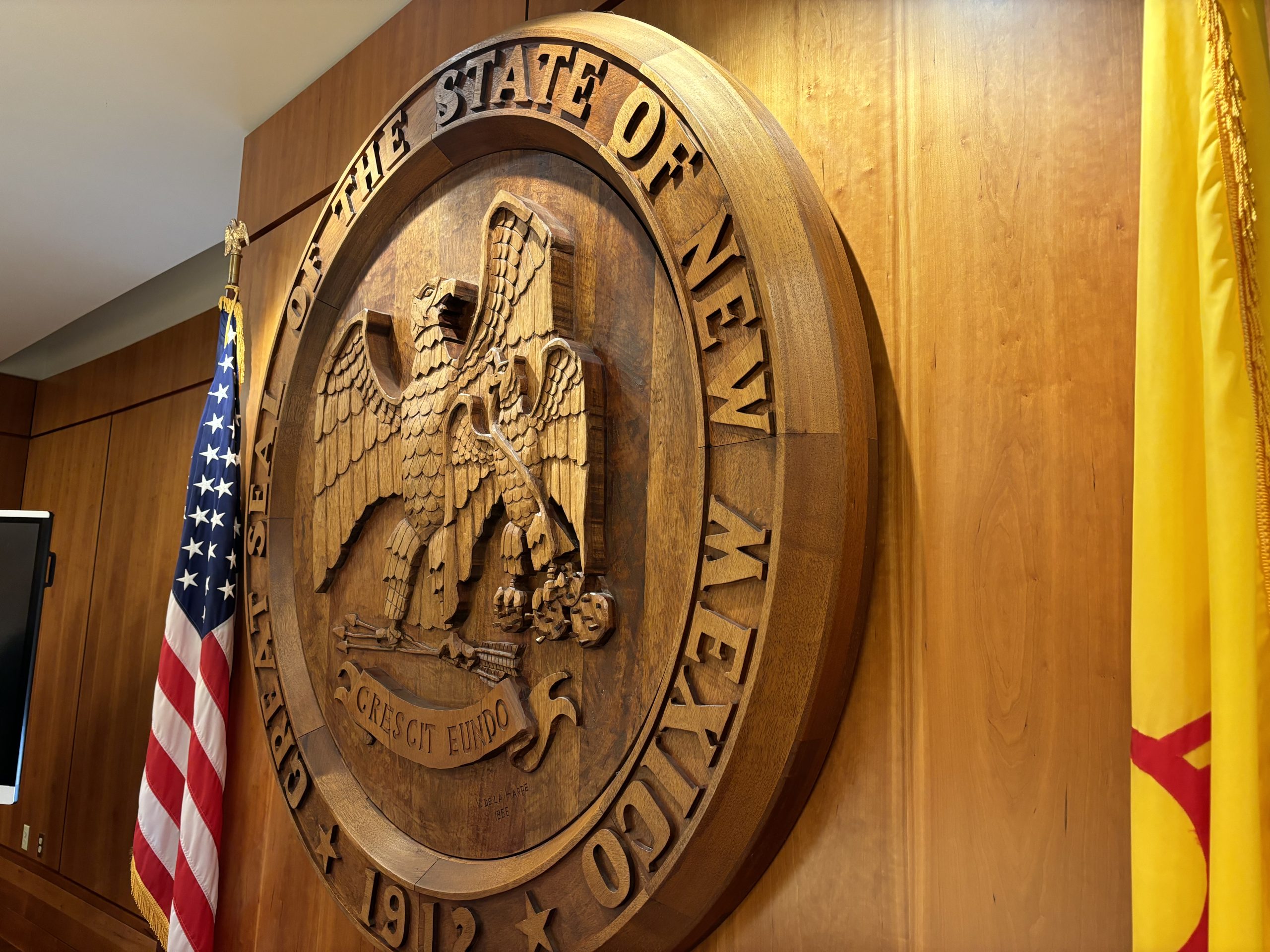
In contrast, the New Mexican Democrat-controlled legislature fast-tracked The Immigration Safety Act, which bans government bodies from detaining individuals with federal civil immigration violations and contracting with ICE on detention facilities. It was signed into law on Feb. 5.
“This legislation reinforces protections for New Mexico’s immigrant communities amid tremendous amounts of fear and uncertainty,” Democratic Rep. Eleanor Chavez said at a Feb. 5 news conference.
Republican lawmakers representing areas surrounding the state’s three existing ICE detention centers warned about the potential loss of jobs, but supporters argued the state should invest in job retraining and economic development.
The American Civil Liberties Union-New Mexico commended the law for “cementing New Mexico’s place as a national leader in protecting immigrant communities and refusing complicity in the Trump administration’s mass detention and deportation system.”
The ACLU in Tennessee is also pushing back against state cooperation with ICE. The organization assisted seven Nashville city council members in their lawsuit accusing the state of acting unconstitutionally for prosecuting local officials who adopt or vote for policies that conflict with the state’s mandated views on immigration enforcement, according to the legal complaint.
On her first day in office, Virginia Gov. Abigail Spanberger rescinded her predecessor’s executive order that allowed 287(g) agreements. In mid-February, she instructed state agencies to note any such agreements, terminate them and identify when they end.
Virginia House Bill 1441 proposed to prohibit law enforcement officers in assisting federal authorities with enforcing immigration laws unless presented with an official judicial warrant.
House Bill 1438, which was incorporated into the bill, proposed that no state law enforcement agency can enter a federal immigration enforcement agreement unless the names of federal officers are provided seven days in advance, the federal officers clearly identify themselves and do not conduct immigration enforcement at schools, churches or courthouses, amongst other factors.
Favoring Cooperation
Legislation in favor of working with ICE includes protections for officers, requirements for cooperation and allowances for local officers to serve immigration warrants.
Minnesota Republicans say they intend to revive a bill requiring local governments to cooperate with federal immigration enforcement. Additionally, two bills were introduced that would protect the personal information of public safety officers and make protesting at peoples’ homes a crime.
Kansas House bill 2771 arranges liability and legal protections for officers.
Also in Kansas, Senate Bill 452 would extend certain laws that apply to state and local police to also cover federal law enforcement, like statutes dealing with interference with law enforcement, access to public buildings and some traffic and vehicle regulations.
Calling his interest “big picture,” Senate President Ty Masterson, a Republican, said he wanted to avoid situations seen in other states where law enforcement operations are disrupted.
“I don’t want the situations going on in Minneapolis happening in Kansas, right?” Masterson said.
Law enforcement lobbyist Ed Klumpp said the measure would not expand federal authority but would give local officers clearer tools when federal agents face interference.
Critics argued the change could make it harder to hold federal officers accountable and could discourage lawful protest.
Rabbi Moti Rieber, executive director of Kansas Interfaith Action, said the bill would expand immigration enforcement while shielding officers from accountability.
“We will protect our neighbors with every non-violent means at our disposal,” Rieber said. “Because God’s law outweighs Masterson’s law.”
In Arizona, six out of 15 counties already have 287(g) agreements.
In the Republican-controlled legislature, pro-cooperation measures are advancing. One bill would require state and local law enforcement to fully cooperate with ICE and to check the immigration status of anyone detained if they suspect the person is in the country illegally. The Senate approved that bill Feb. 23.
“Arizona will no longer be a safe harbor for illegal activity or a place where federal laws are ignored,” Republican Sen. Wendy Rogers, who authored the bill, said in a news release. “These bills are about accountability, lawfulness and protecting Arizonans.”
One national organization, the Federation for American Immigration Reform, aims to “reduce overall immigration to a more normal level” to maintain a high quality of life, its website reads.
Ira Mehlman, FAIR media director, said part of what the organization wants is not just reduced immigration, but public safety, management of resources and accountability for those who commit crimes.
“The laws exist to protect the interests of the American public,” he said, and that sanctuary cities can attract people who come illegally because they know they will be protected.
“When you have people who move into your community, you are obligated to educate their children. People turn up in emergency rooms. All of these things drain on resources,” Mehlman said. “Quite frankly, those are the reasons why we have immigration laws in the first place.”
In Missouri, 21 immigration-related bills were proposed, with a mix of pro- and anti-immigration enforcement.
Senate Bill 1265 aims to fine municipalities who consider themselves sanctuary cities, considering the “transportation, concealment, or inducement” of an undocumented immigrant a class D felony and allowing local law enforcement to enforce immigration laws.
Only one bill in favor of stricter immigration enforcement has been introduced in the Missouri House this session. HB2134 would allow certain offices to participate in the Warrant Service Officer Program, which would grant the authority to serve immigration warrants.
Face coverings for law enforcement
Many ICE agents have been seen with much of their faces covered, sometimes wearing hats, sunglasses and gators that cover the mouth and nose. Several bills nationwide are looking at agents’ workwear while trying to balance officers’ anonymity and ability to identify them.
In Minnesota, two bills would ensure ICE agents are easily identifiable, keeping them from being what sponsor Democratic Rep. Leigh Finke described as the “secret police.”
One bill would ban masks and require agents to have visible identification. Another would require vehicles that transport detainees to be marked as law enforcement and restrict the use of civilian vehicles in ICE activities.
“No more secret police, no more broken families, no more illegal detentions and no more killing of our citizens,” Finke said at a recent news conference. “Let’s stand together as a DFL (Democratic-Farmer-Labor Party) and a Minnesota GOP and say no more.”
In New Jersey, Senate Bill 3112 would prohibit on-duty officers from wearing face masks or disguises. A similar bill was introduced last year but didn’t progress.
This time, legislators from both parties have voiced support for the bill. On Feb. 12, an identical Assembly measure advanced out of committee on a 5-2 vote.
“Transparency and public trust are essential to effective law enforcement,” Republican Sen. Jon Bramnick said.
In Virginia, Democratic Sen. Saddam Azlan Salim also introduced Senate Bill 352, which would ban most law enforcement officers from wearing face coverings that hide their identity on duty, with some exceptions. It passed the Senate and is now under review in the House.
A similar House bill was proposed that also established a penalty against officers who do not follow the policy and allowed for civil suits up to $10,000, but the bill was amended to strike that language once it was heard in a Senate committee.
Authorities need to be readily identifiable, Democratic Sen. Michael J. Jones, said.
“We should not wonder who’s approaching us,” said Jones, who sponsored the first bill before he moved to the Senate.
Privacy and location restrictions
Many states have seen bills proposing restrictions on where ICE can operate, how entities interact with the agencies and how surveillance technology is used and by whom.
In Kansas, House Bill 2692 would limit warrantless searches and prohibit raids in locations such as places of worship, schools, daycare centers, hospitals and courts.
Senate Bill 287 would carve out strict boundaries on law enforcement participation in federal immigration enforcement in “sensitive places.” The bill would bar officers from assisting ICE in schools, hospitals and places of worship.
In New Jersey, with the state now operating in its latest session, several additional privacy bills have been introduced. Bill SR130 demands the reversal of the federal policy in which the International Revenue Service (IRS) shares private taxpayer information with ICE.
In Georgia, House Bill 1050 would protect student data and records from federal immigration officers. ICE’s obtaining these documents would require a court-issued warrant, consent from parents or a medical emergency.
Part of the bill also requires schools to have counselors or officers as the ones to interact with the federal officers.
“They should just be civil about it, right? They don’t have to be purposefully brutal and mean about it, and that includes, in my opinion, asking for school systems or even going into schools to go after kids,” said Democratic Rep. Eric Gisler, sponsor of HB1050.
Another, Senate Bill 464, would limit the use of surveillance technology: Federal immigration officers would no longer have access to surveillance footage to track or identify individuals without a reason or offense.
In Missouri, House Bill 1926 would keep the citizenship status of patients between healthcare providers and patients. Democratic Rep. Gregg Bush introduced the same bill text during the 2025 session, but it did not pass. He says it more than likely will not pass again.
“There are people that are in the legislature that don’t want to have this conversation about what it means to be a non-white person in this country, even if you are a citizen,” Bush said.
Virginia Sen. Salim also introduced Senate Bill 783, which stated that federal immigration officers cannot enter a home without a judicial warrant, that state police would investigate any shooting that occurred during an ICE officer’s official duties and that ICE cannot use surveillance technology to conduct immigration enforcement in the state.
The Fairfax, Virginia, committee of We Are CASA, a national advocacy group for marginalized communities, gathered at the General Assembly building with other groups like the ACLU in late January.
Together they spoke to bill patrons, shared stories and urged lawmakers to push for immigrant rights and protections. Advocates called for strengthening the trust between law enforcement and immigrant and working-class communities.
George Escobar, executive director of We Are CASA, said it’s important that state resources are not used inappropriately when working with the federal government.
“Right now, ICE is a rogue, federal paramilitary organization that is going completely beyond the letter of the law in its tactics,” Escobar said.
This article was produced through the Statehouse Reporting Project, a collaborative effort by collegiate journalism programs across the country. The lead reporter was Zoe Naylor of the University of Missouri, and contributors were Sarah Shockey of Rowan University, Elliot Akerstrom of the University of Kansas, Natalie Ogami of Arizona State University, Victor Martinez of the University of New Mexico, Aleks Arwood of the University of Georgia, Grey Steele of the University of Tennessee at Chattanooga, Hannah McDonough of the University of Missouri, Abbey Mulcahy of the University of Minnesota and Alessandra Caceres Mendoza of Virginia Commonwealth University.
UNM Student majoring in Multi Media Journalism