JUANA SUMMERS, HOST:
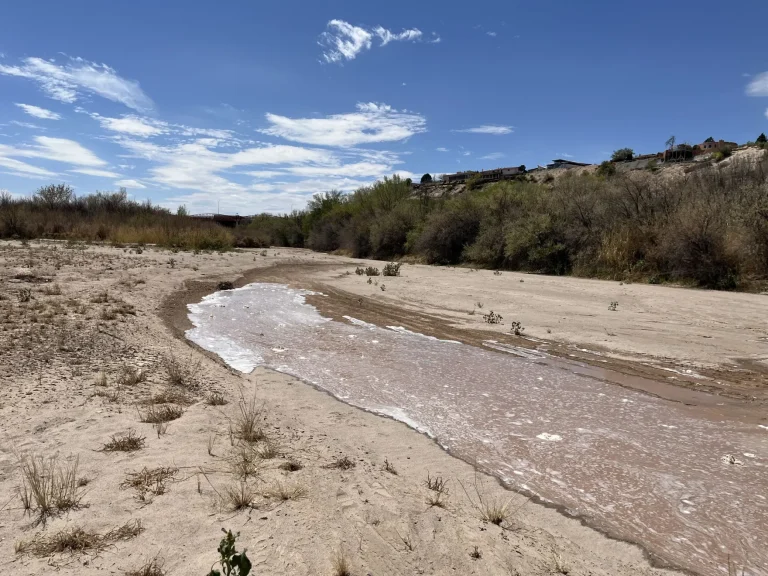
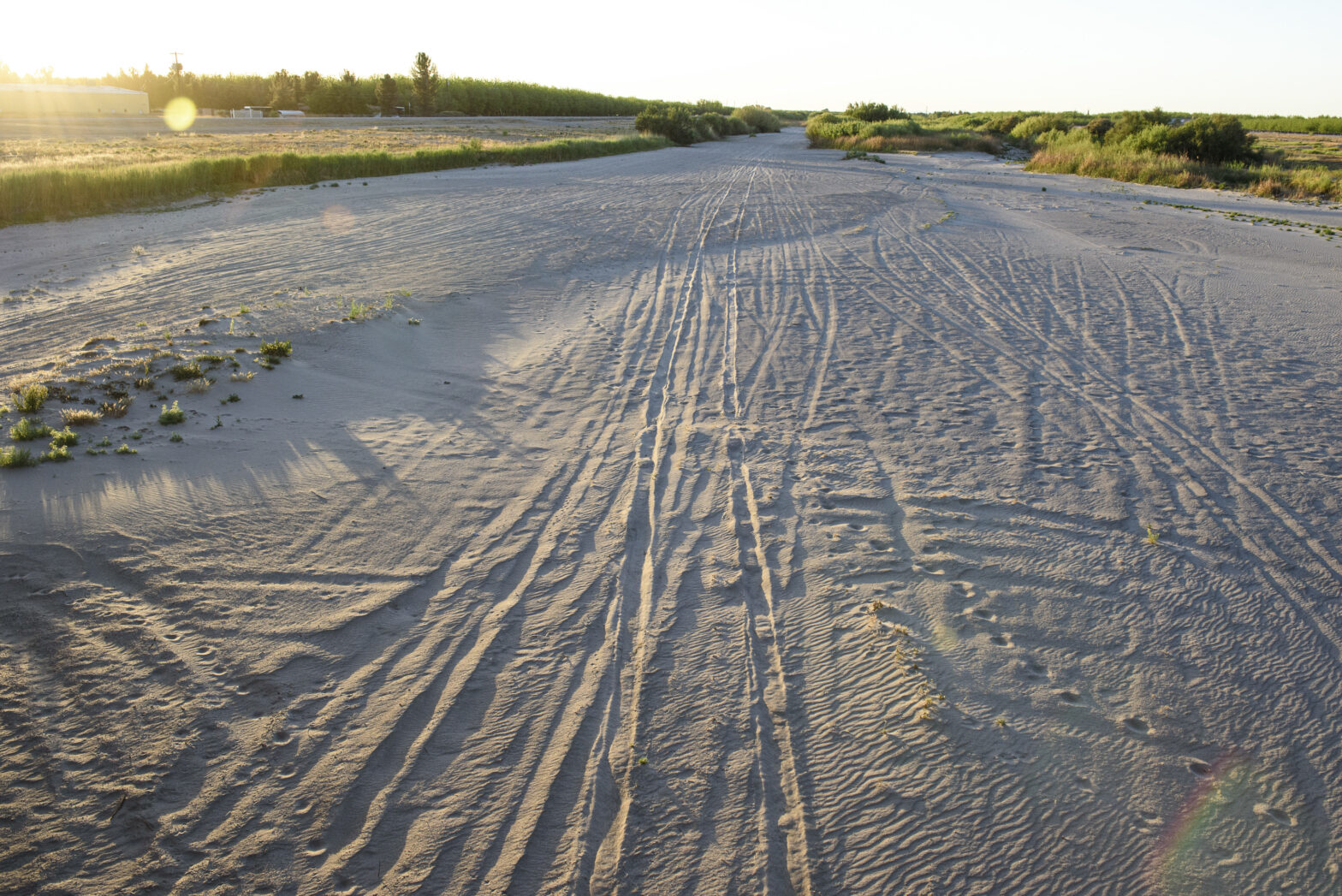
The megadrought on the Colorado River has been getting a lot of headlines lately, but another major western river, the Rio Grande, is having its driest year on record. There’s currently no water in the riverbed where it passes through Albuquerque. This is only the third time in 40 years that’s happened. Bryce Dix with member station KUNM reports on extraordinary measures being taken to save trees that depend on the river.
BRYCE DIX: Just before noon on a late summer day, what’s supposed to be the Rio Grande in Albuquerque is instead sandy, dry and dotted with young, low-growing shrubs and bits of trash. Massive cottonwood trees line both banks, providing coveted shade and a rare streak of green. Kim Eichhorst leads a University of New Mexico research program that closely watches over this forest – or as locals lovingly call it, the Bosque.
KIM EICHHORST: We’re in a time where we’re seeing less and less snowpack. It’s evaporating early. So that is critical for a lot of our native riparian species, like the cottonwoods and the willows.
DIX: The browning vegetation hasn’t seen much water for about three months, until now.
DIX: Alarmed by the unprecedented drought, conservationists like Paul Tashjian spearheaded an effort with local agencies to rewet the river. They released 650 million gallons of Colorado River water from a reservoir into the Rio Grande. The goal is to save Albuquerque’s century-old cottonwoods, whose roots rely on the river to survive.
PAUL TASHJIAN: It’s kind of existential, what we’re seeing out there. I don’t think we’re going to see a complete dieback, but we might end up with 30% less trees come next year.
DIX: Scientists predict New Mexico will lose a fourth of its water from droughts and extreme heat in the next 50 years. Again, Kim Eichhorst from the University of New Mexico.
EICHHORST: Climate change is rapidly shifting things, but it’s also going to force our hand because we won’t be able to support having a forest. We won’t be able to restore a cottonwood forest along the entire river.
DIX: Humans have created these conditions, and Eichhorst says it will take unwavering commitment to ensure the Bosque survives for generations to come. For NPR News, I’m Bryce Dix in Albuquerque.
Bryce Dix is the local host for NPR’s Morning Edition. Previously, he worked with New Mexico PBS and served as interim news director for Santa Fe’s KSFR radio station. Bryce is a native of Burqueño, N.M. He graduated from the University of New Mexico in 2026 where he earned a Masters in multimedia journalism. He was a 2020-2021 New Mexico Local News Fellow at KNME. Bryce can be contacted at brycedix@kunm.org