By Damien Willis | Organ Mountain News
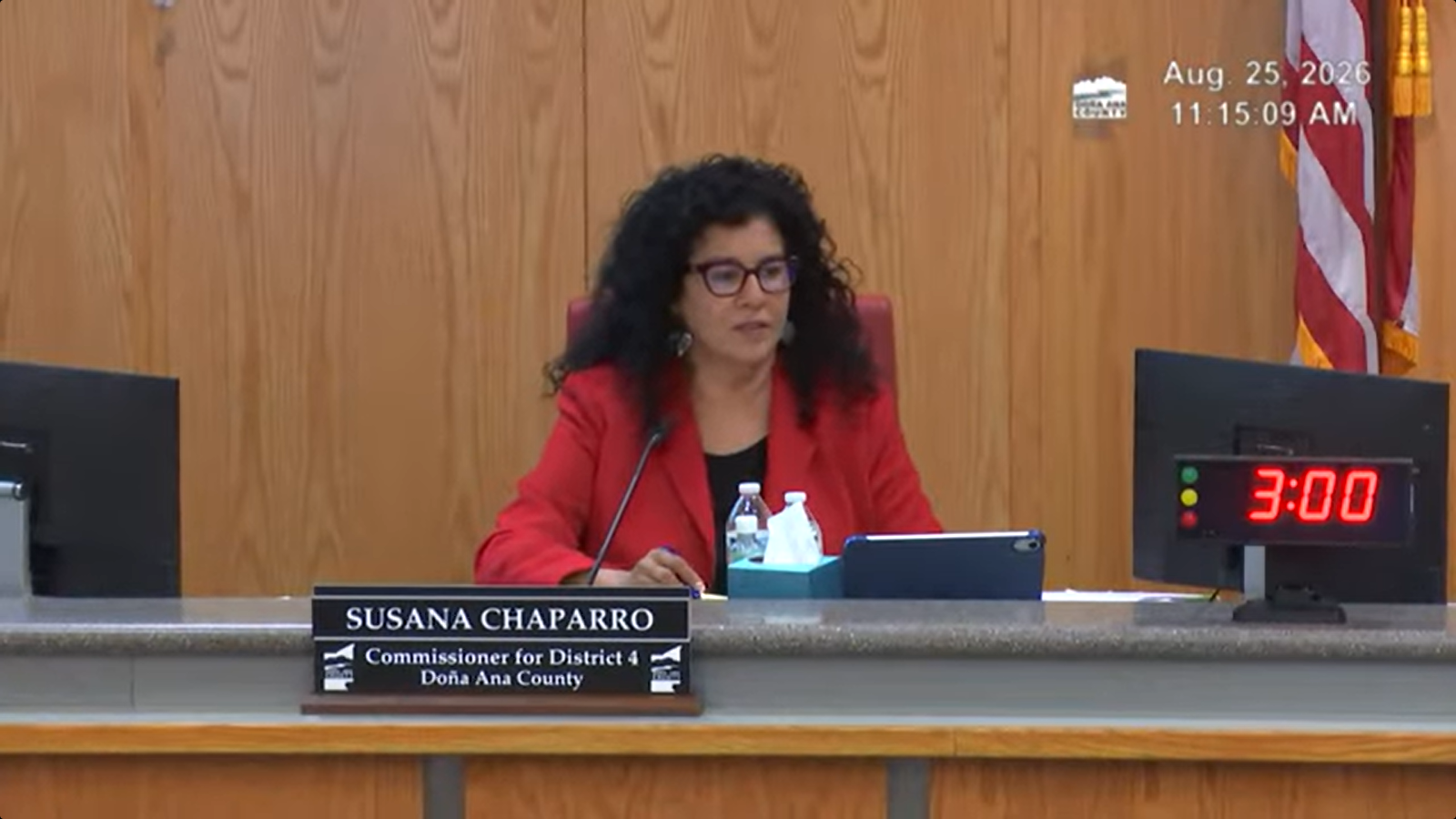
LAS CRUCES – Small farmers in Doña Ana County could be at risk of losing their land as limited irrigation water leaves some searching for help with wells, conservation measures and new pumping equipment, Commissioner Susana Chaparro told New Mexico State University Cooperative Extension officials last week.
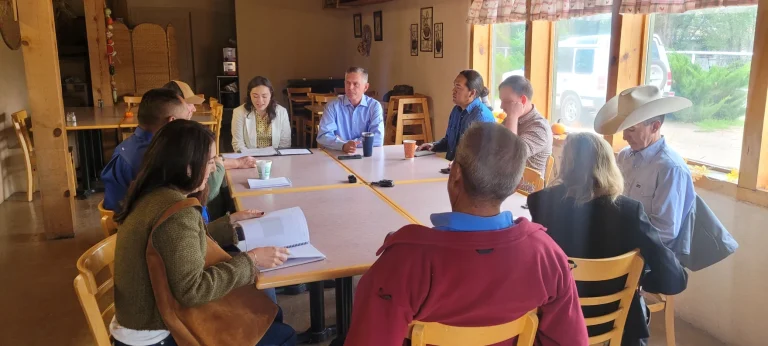
Chaparro raised the concern Aug. 25 after Extension officials presented their annual report to the Doña Ana County Commission.
She said she had visited farmers in the Mesilla area who described receiving only one irrigation watering this year totaling about 4 inches.
“This year the farmers were able to get this much water — one watering, four inches — which is of great concern to me,” Chaparro said.
She said the challenge can be particularly acute for small growers farming only an acre or a few acres.
“We have pockets of small farmers, whether it’s an acre, two acres, five acres,” Chaparro said.
Many of the farmers she has spoken with are Spanish speakers, she said, and some need help identifying resources available to keep their operations viable.
“There’s not enough loans and grants for them to either dig wells or plan for conservation of water, watering of their crops, to connect electrical pumps, things of that [nature],” Chaparro said.
She asked Extension officials whether there was someone locally who could work directly with those farmers.
Extension points farmers to local specialist
Eva Madrid, a 4-H agent with the Doña Ana County Cooperative Extension Service who delivered the Extension presentation, said the local office can connect farmers with agricultural expertise both in the county and at NMSU.
Madrid identified Jeff Anderson, the county’s agronomy and horticulture agent, as the primary local contact.
“They can connect with our agronomy and horticulture agent Jeff Anderson, who would then be able to connect with specialists at the university,” Madrid said.
She said Extension’s connection to NMSU’s College of Agricultural, Consumer and Environmental Sciences gives local agents access to university specialists when farmers need expertise beyond what the county office can provide.
Chaparro asked Madrid to provide Anderson’s contact information to her office so she could connect farmers directly with him.
Extension offices operate in all 33 New Mexico counties.
Drought-tolerant crops among research efforts
Madrid also pointed to research involving yellowhorn, a drought-tolerant crop being studied for its potential in the region.
She said Anderson has been looking at possible uses for the crop, though the work remains in its early stages.
Agriculture and natural resources are one part of a much broader Cooperative Extension operation in Doña Ana County.
Extension officials told commissioners the county has 11 traditional 4-H clubs stretching from Hatch to Santa Teresa, with about 360 members and 118 volunteer leaders. Its youth programs recorded more than 6,000 contacts during the year.
Extension also provides gardening and hydroponics education, nutrition programs, diabetes-management education and information for agricultural producers confronting emerging threats such as New World screwworm.
Its nutrition education programs reported 1,077 graduates across 62 education sites working with 24 partner agencies, including 19 schools.
But Chaparro’s questions brought the presentation back to a much more immediate concern for some local producers: whether they have enough water — and enough assistance — to keep farming.
Damien Willis is founder and editor of Organ Mountain News. Previously, he was a lead reporter for the Las Cruces Sun-News. From 2014 to 2017 he served as the newspaper’s education reporter.
This story was originally published by Organ Mountain News.