By Damien Willis | Organ Mountain News
LAS CRUCES – Two Las Cruces city councilors are pushing for stronger oversight and public disclosure around the city’s use of Flock surveillance technology, including a city-level policy governing surveillance tools and a public portal showing how police collect, search and share vehicle data.
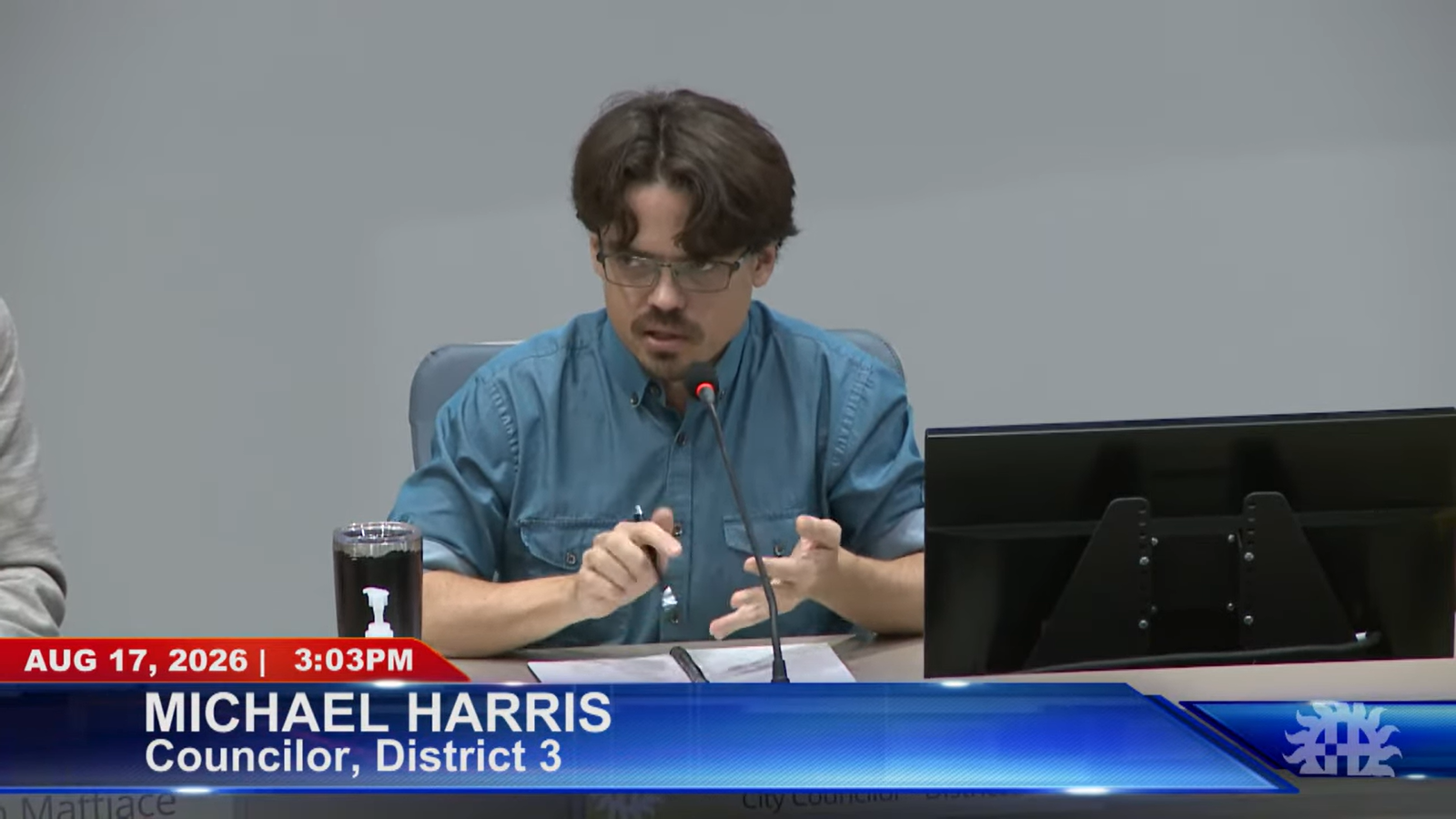
Councilors Michael Harris and Johana Bencomo raised the issue Monday after spending about two hours last week with a Las Cruces Police Department lieutenant discussing the city’s use of Flock in detail.
Harris said he remains uneasy with what he called “creeping surveillance,” but came away impressed by some of the safeguards LCPD has put in place.
“I was pleased to see kind of a lot of the thoughtfulness and consideration that LCPD has put into their policies,” Harris said.
He said the department goes beyond some state requirements and credited Las Cruces Police Department Lt. Peter Bradley with considering safeguards Harris had not.
But Harris said departmental policy alone may not be enough.
“Departmental policies are subject to change,” he said.
Harris said he remains interested in a broader city policy governing surveillance technology, rather than leaving rules solely to individual departments.
What is Flock?
Flock Safety operates automated license plate reader systems used by law enforcement agencies to capture and search vehicle information.
The technology has become increasingly common among police departments as a tool for locating stolen vehicles, identifying vehicles associated with crimes and generating investigative leads.
But its rapid expansion has also fueled nationwide concerns over mass surveillance, data retention and the ability of law enforcement agencies to share information across jurisdictions.
In Las Cruces, the debate has increasingly centered not only on whether the technology can help solve crimes, but on who can access the data, how long it is kept and what limits should govern its use.
Bencomo calls for public data portal
Bencomo made clear Monday that she remains deeply skeptical of the technology itself.
“I will just not ever be someone who is supportive or excited about mass surveillance, especially from a company like Flock,” she said.
She also pointed to concerns about how surveillance data could be used in the context of federal immigration enforcement.
Still, Bencomo said that if Las Cruces is collecting the data, the city has a responsibility to manage it responsibly and tell residents far more about how the system operates.
She said LCPD is working on a transparency portal provided by Flock and urged the department to launch it as soon as possible.
Bencomo said the portal should disclose, among other things:
- the number of cameras in use
- the number of scans performed
- data-retention periods
- the number of vehicles detected during a given period
- the number of searches conducted
- the number of “hot list” hits, such as stolen vehicles or Silver Alerts
- which agencies LCPD shares data with
- which agencies provide data to LCPD
- what the cameras detect and do not detect
- prohibited uses of the system
- a link to LCPD’s internal policy governing the cameras
“I think there’s a lot we can do,” Bencomo said.
She also agreed with Harris that Las Cruces should eventually consider creating its own transparency portal rather than relying entirely on one supplied by Flock, with additional auditing mechanisms built in.
Bencomo said she continues to oppose mass surveillance but expressed confidence in Bradley and the LCPD team after the lengthy discussion.
“I have trust in him and the team that we can move forward into this place of being very transparent and honest and responsible with the kind of data that we are collecting from our residents,” she said.
Debate has been building
The concerns did not first emerge Monday.
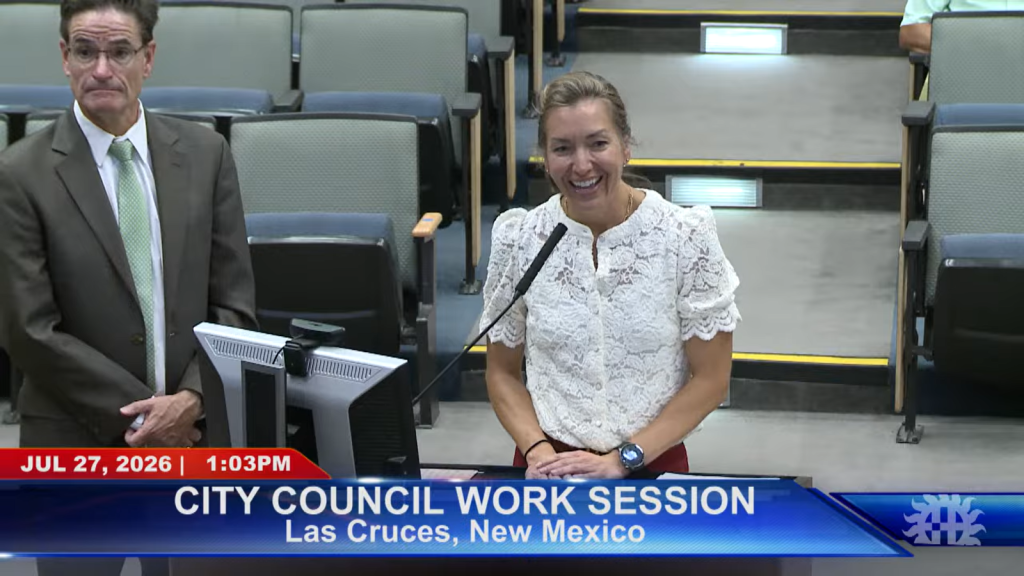
During a July 27 City Council work session, Bencomo asked an outside policing consultant about model policies cities could use to regulate surveillance technology.
She specifically raised Flock and the Real-Time Crime Center, saying the tools can produce significant public-safety benefits while also creating serious risks of over-surveillance, particularly for some communities.
Teresa Magula of OIR Group, a policing consultant working with the city, told councilors that local governments can create surveillance-use policies governing data retention, sharing agreements, user access, supervisory controls and audits.
Magula said agencies should take responsibility for those safeguards rather than leaving control solely with technology vendors.
She also suggested audits should examine not only searches performed locally, but searches other jurisdictions conduct against Las Cruces data.
Harris said during that July discussion that he wanted council to return to surveillance policy in the future.
Monday’s comments suggest that conversation is now moving closer to a more formal policy discussion.
No citywide surveillance ordinance or policy was adopted Monday, and council took no formal action on Flock.
Damien Willis is founder and editor of Organ Mountain News. Previously, he was a lead reporter for the Las Cruces Sun-News. From 2014 to 2017 he served as the newspaper’s education reporter.
This story was originally published by Organ Mountain News.