“Systemic failures” are shaping New Mexico’s animal services and the state needs a dedicated animal protection department to fix them, according to a new report by nonprofit Animal Protection New Mexico.
The 156-page report, commissioned by state Rep. Tara Lujan, a Santa Fe Democrat, highlights the challenges plaguing animal shelters, animal control programs and equine rescues across the 24,000-square mile north central region of New Mexico: overpopulation, understaffing and funding issues. A New Mexico animal protection department would provide coordination and accountability and serve as a valuable central point of contact, according to the report.
New Mexico lacks a consolidated state authority that is responsible for domestic animal welfare.
“I think it’s desperately, desperately, desperately needed,” said Stacie Voss, chair of the state Animal Sheltering Committee. “There is no central organization or oversight for companion animals in our state. A lot of other states, like Colorado or even Virginia, have centralized organizations or authorities that animal shelters can answer to, and we simply don’t have that.”
Other recommendations as the next legislative session nears include increasing state investment in animal protection; establishing public-private partnerships; bolstering data collection; and prioritizing well-funded, accessible spay, neuter, gelding and fertility control programs.
“I look forward to helping move this report’s recommendations forward through state policy, state funding, and collaborative and inclusive planning and implementation processes,” Lujan, who did not respond to a request for an interview, wrote in the report’s introduction letter.
Meanwhile, a recent court ruling dealt a potential blow to one of New Mexico’s main statewide animal welfare initiatives designed to help curb the overpopulation of unwanted dogs and cats.
A judge in the 1st Judicial District Court last week granted partial summary judgment in favor of the Pet Food Institute and others challenging the state’s affordable spay and neuter program, which is funded largely by an annual $100 fee on pet food manufacturers. The Washington, D.C.-based Pet Food Institute filed a lawsuit in 2020 against Gov. Michelle Lujan Grisham and other state officials, arguing the fee is a tax and therefore unconstitutional.
In his order, Judge Matthew Wilson agreed, writing “the Spay and Neuter Program Fee is a tax and not a fee” and stating the tax is “clearly discriminatory” and unconstitutional.
It is unclear what the order means for the program, which dispersed $1 million in October to 28 spay and neuter and animal welfare organizations across New Mexico.
“As a committee … we just don’t know yet,” Voss said. “We’re just disappointed because we had actually gone through the application process and made our recommendations to the board for funding for this fiscal year, and we had just done that when the judgment came down.”
‘Investment upstream’
Many of the issues faced by animal shelters, animal control programs and equine rescues are intertwined, according to the report, released Monday. The report spans Rio Arriba, Taos, Colfax, Mora, San Miguel, Santa Fe, Los Alamos and Sandoval counties and 16 tribes, and is based on interviews with more than 100 people between September 2024 and March 2026.
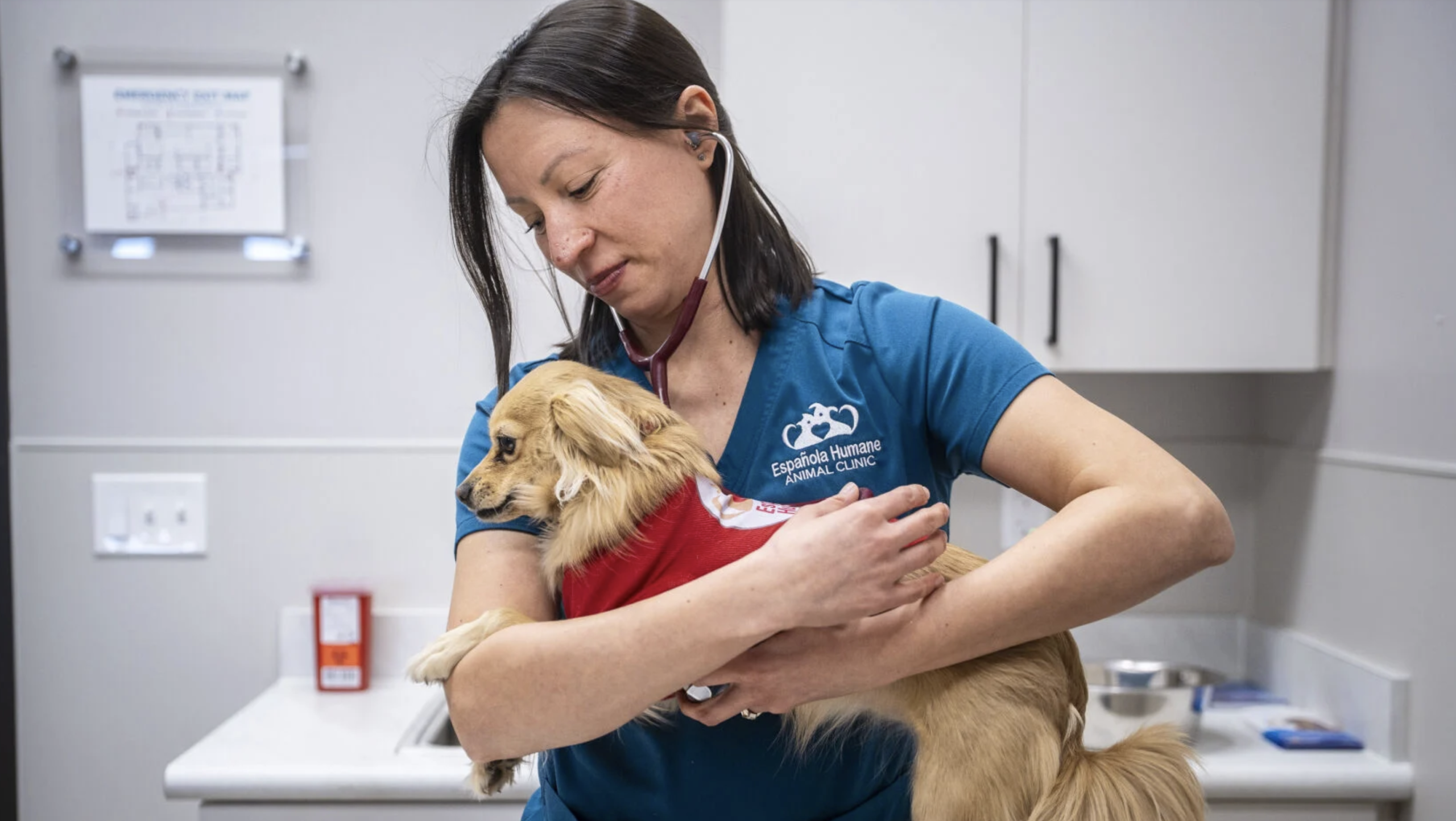
“This report puts data and language around something animal welfare organizations across New Mexico have been living every day: we cannot solve a statewide problem one shelter, one county, or one crisis at a time,” Española Humane spokesperson Mattie Allen said in a statement. “To prevent animals from arriving at shelters in crisis, we need investment upstream, not simply more capacity downstream.”
Only one-tenth of one cent of every dollar from New Mexico’s $11 billion budget goes toward animal services, according to the report.
New Mexico has one of the highest per capita shelter intake rates in the United States. Of the state’s 45 animal shelters, the 10 in the region covered by the report said they operate at or above capacity about 90% of the time.
“That statistic alone speaks to the pressure facing shelter staff, volunteers, and local governments,” the report reads. “But behind the numbers is a more complex story: one of innovation, adaptation, and steady effort to improve care for animals while responding to chronic overcrowding, limited veterinary access, and years of disrupted spay/neuter funding.”
That more complex story involves Española Humane’s rich foster network, for example, which provides care for about half of its animals off-site and helps manage ballooning intake. Raton Humane Society, about six miles south of the Colorado border, transports nearly half of its animals to a prison dog program in the Centennial State — and has reached a 100% live-release rate.
But Northern New Mexico and tribal communities face “shelter deserts,” where animal welfare resources are slim or nonexistent, according to the report.
None of the north-central region’s 15 pueblos or the state’s 23 federally recognized tribes have their own shelter.
“Our Pueblo communities face a wide range of challenges and unique circumstances when addressing animal control, protection, and welfare,” San Ildefonso Pueblo Gov. Christopher A. Moquino said in a statement on behalf of the Eight Northern Indian Pueblos Council Board of Governors. “These challenges extend beyond dogs and cats to include equine and livestock needs, and are compounded by limited funding, education, resources, and appropriate housing and infrastructure.”
At least six of the tribes in the north-central region also lack an established animal control program or animal control officers.
“In these settings, animal concerns may be handled through informal processes or by other public safety entities, which can strain tribal agencies, create inconsistency in response, and limit prevention-focused approaches,” the report reads.
The report also details the pitfalls of animal-related disaster preparedness and response in the north-central region. Animal emergency management faces significant limitations, according to the report, though the need for it is “increasingly urgent” with insufficiently coordinated mechanisms for safely evacuating and housing animals during recurring natural disasters, like wildfires and floods.
“Emergency management staffing levels in New Mexico are lean,” the report reads. ” … Under these conditions, animal issues are often deferred unless partners provide ready-to-implement solutions.”
One emergency manager told Animal Protection New Mexico: “We do talk about animal response, but we constantly have to triage.”
Shelters were stretched thin in 2022 amid the Hermits Peak/Calf Canyon Fire, the largest wildfire in recorded New Mexico history. Española Humane sheltered more than 55 pets displaced by or rescued from the fire — including every animal at its sister shelter in Las Vegas, according to the Santa Fe Community Foundation.
The report advocates for the development of a statewide animal emergency management resource directory, pre-positioning equipment such as portable kennel systems at shelters and adopting minimum preparedness standards for shelters and rescues, among other recommendations.
Voss said she thinks larger shelters that are better resourced — and that the state tends to rely on in an emergency — often step in and help smaller shelters that are less prepared for disaster.
“It’s just that balance of ‘how do you prepare locally?’ ” Voss said. “But then I don’t think a lot of the communities in the state are generally prepared to handle any of that on their own. They’re always going to have to reach out and need help.”
Lily Alexander is a state accountability reporter for The Santa Fe New Mexican, focusing on equity and transparency. Her position is part of the New Mexican Public Service Journalism Fund. She was a 2025-2026 New Mexico Local News Fellow at The New Mexican. Lily holds a bachelor’s degree in multimedia journalism from the University of New Mexico, where she served as the editor-in-chief of its independent student newspaper, TheDaily Lobo. There, she reported on transparency at the university police department and filed a now-settled public records lawsuit for access to the department’s weapons inventory.