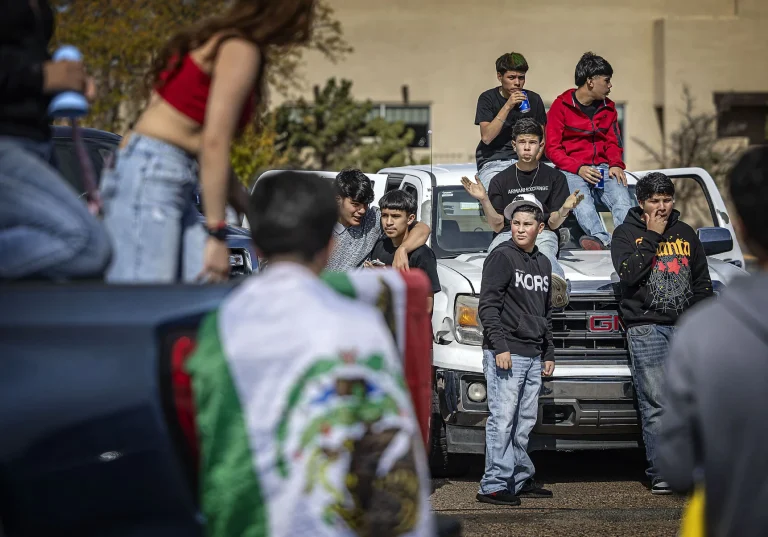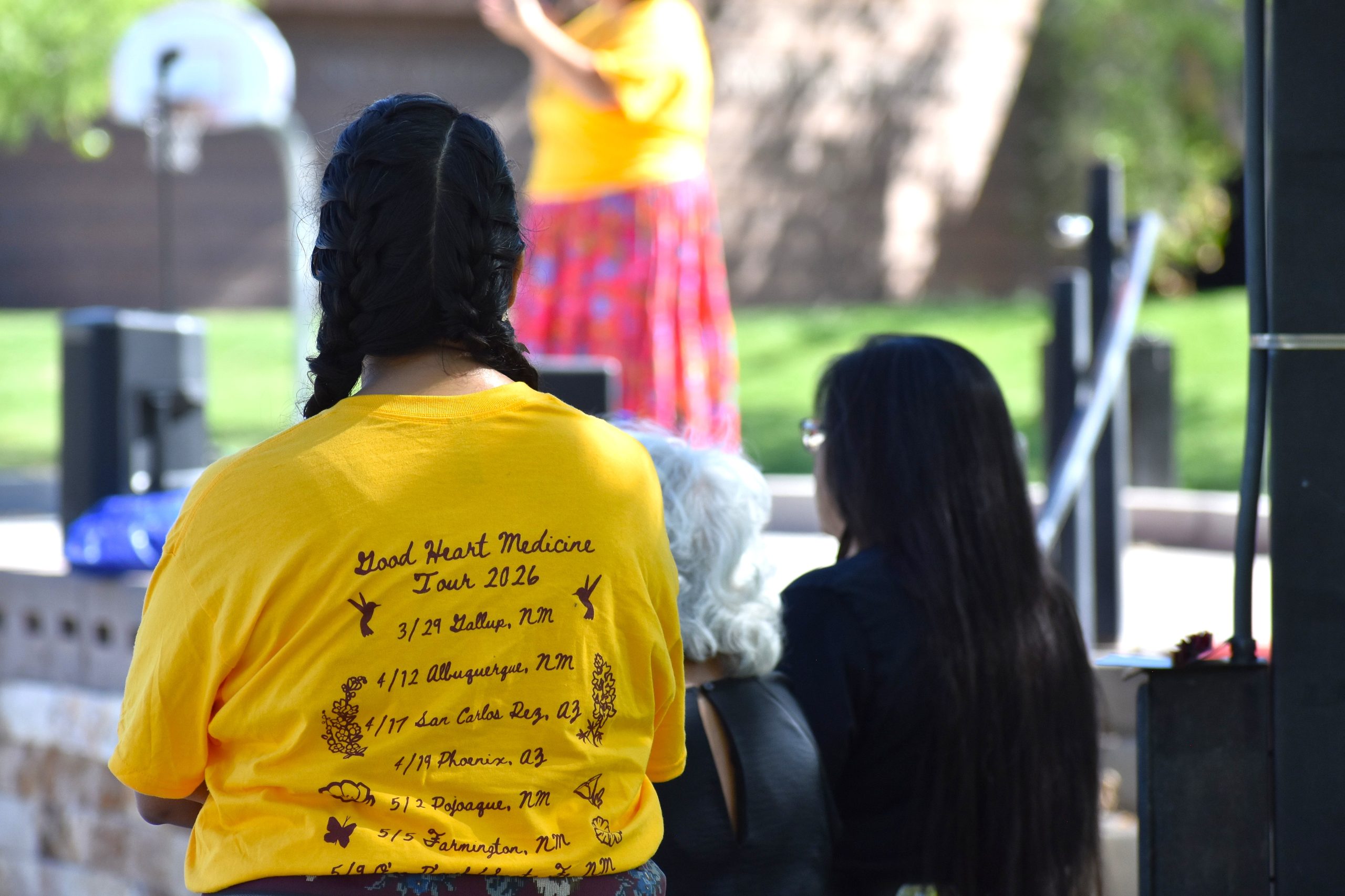
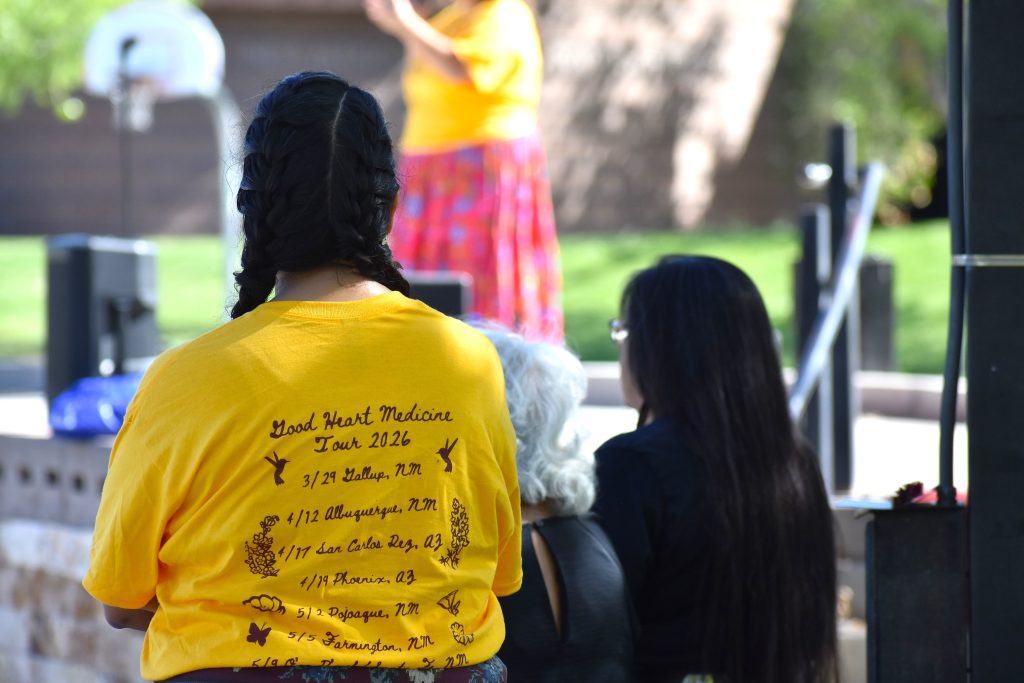
About 100 people gathered at Old Town Albuquerque’s Tigeux Park smiling and laughing on a warm and sunny morning in April. The joyous gathering wasn’t for your typical park event. The local Native American community had come together to talk about Missing and Murdered Indigenous Women and Relatives.
The Good Heart Medicine Tour is making its way through the Southwest and stopping in communities most impacted by the MMIWR crisis.
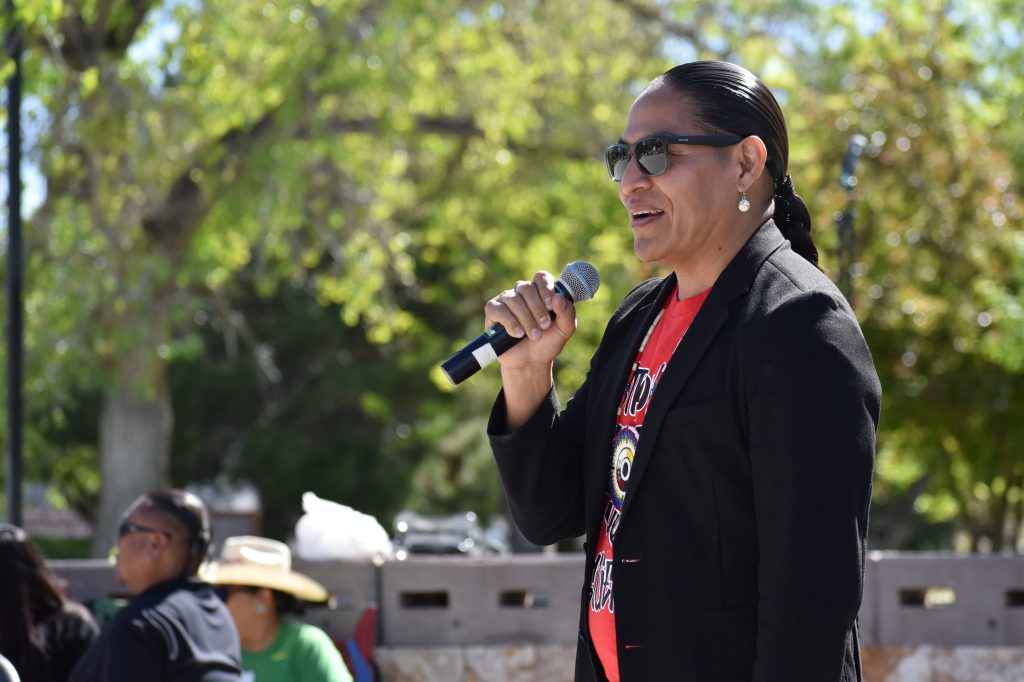
“My role is making sure the vibe is right and make sure everybody feels welcome,” said Guest Emcee Leroy Silva. “That they leave with certain nuggets of knowledge, but also to connect with other community champions who have maybe no knowledge of the subject, or those who are coming in with family members who have been a part of that process.”
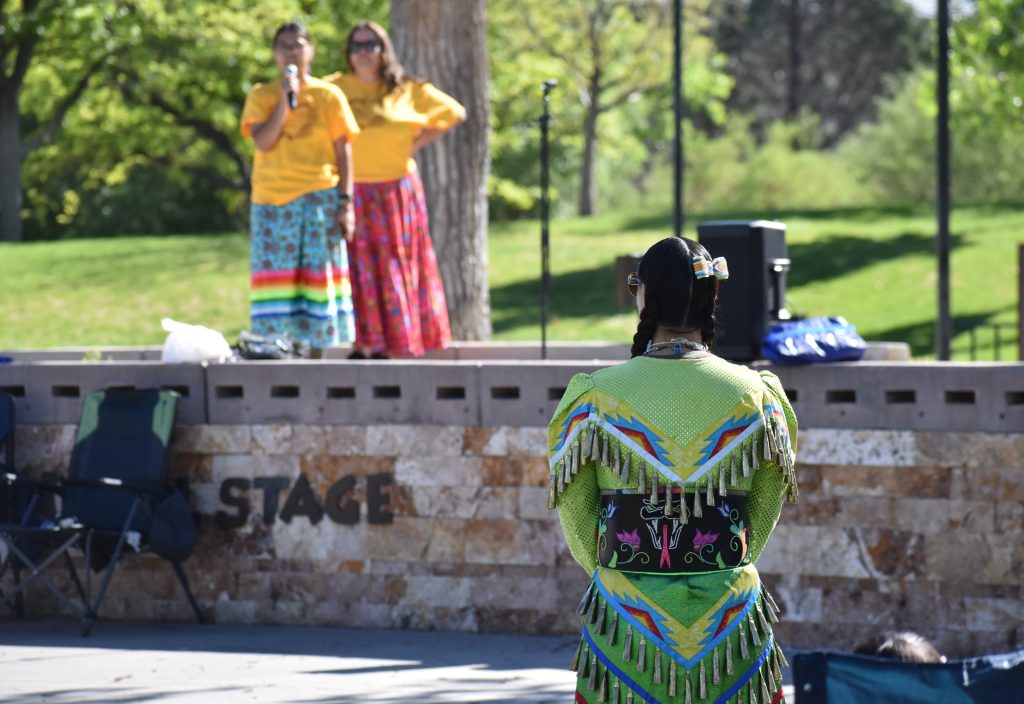
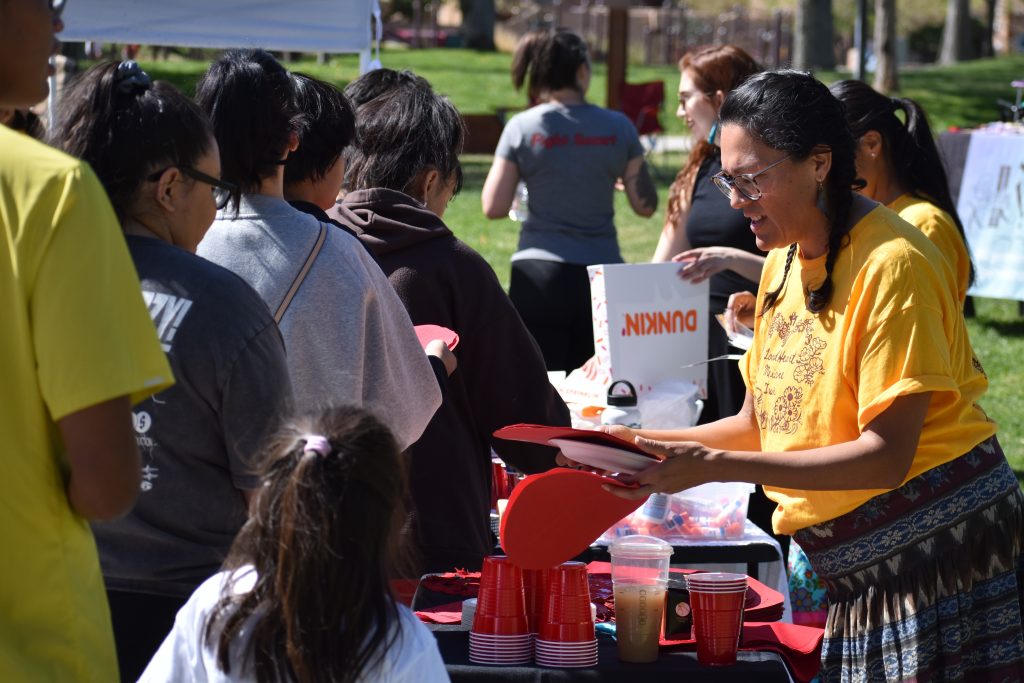
Organizations set up booths around the stage to provide resources and held dances and classes for the community in case they ever find themselves dealing with a missing person’s situation.
Director and writer, Amanda Erickson, led the tour. She said it serves as a healing circle to bring awareness to MMIWR.
“One of the biggest things that pushed this initiative is all the amazing advocates, organizers, and just community members that are so willing to show up and come together and support each other in the effort to end this crisis,” she said.
At the heart of the tour is Erickson’s 2025 documentary, “She Cried That Day.” The film follows multiple families and shows the struggles they face as they seek justice for their missing and murdered relatives. This in-depth look at the crisis highlights the process and ongoing fight to create change within Native communities.
The crowd moved from the park into the Albuquerque Museum to screen Erickson’s film.
Cameron Ward helped set up the tour’s Albuquerque stop. The founder of Art Off the Rails, which supports local Native artists, reflected on the film after the screening.
“It was very emotional watching it,” she said, “but, you know, Amanda did a great job — her and her team getting like multiple different interviews, meeting with the family, bringing in other awareness that, you know, this is not just a focus towards women, but all Indigenous relatives.”
Elisia Manuel of Three Precious Miracles, an organization out of Sacaton, Arizona, participated in the event as a community healer.
“Yeah. My role today is to be a co-facilitator for the talking circle at the end of the film,” she said, “I want people to leave with that spark, or that seed of hope, that their family member’s not lost. We’re hearing them. We see you, and we’re going to continue to advocate, and we’re going to keep fighting for you.”
Throughout the event, organizers offered words of encouragement to the audience. The subject was heavy but necessary for some to face. Emcee, Leroy Silva kept things light, but also had some advice for those dealing with the issue.
“They’re not alone,” he said. “If they do have a story to share that, you know, people will listen to them. To know that they’re bringing voice to this challenge, but at the same time, there’s power in numbers. So, I feel that, I wish, I hope that people leave that there’s a sense of support. But also, to those who have never heard about it, that they leave with a sense of knowledge — but also, they can share with their families and communities.”
In the end, organizers said they were hopeful that this was the beginning of change.
“I hope people can leave, you know, with that there is community and healing can happen outside of home,” Ward said.
“So, I want people to know that we are still here and you have relatives all over that are going to come together and fight together,” said Manuel.
The tour continued from Albuquerque to San Carlos, Arizona, before heading to Phoenix. It’ll return to New Mexico in early May for its final leg.